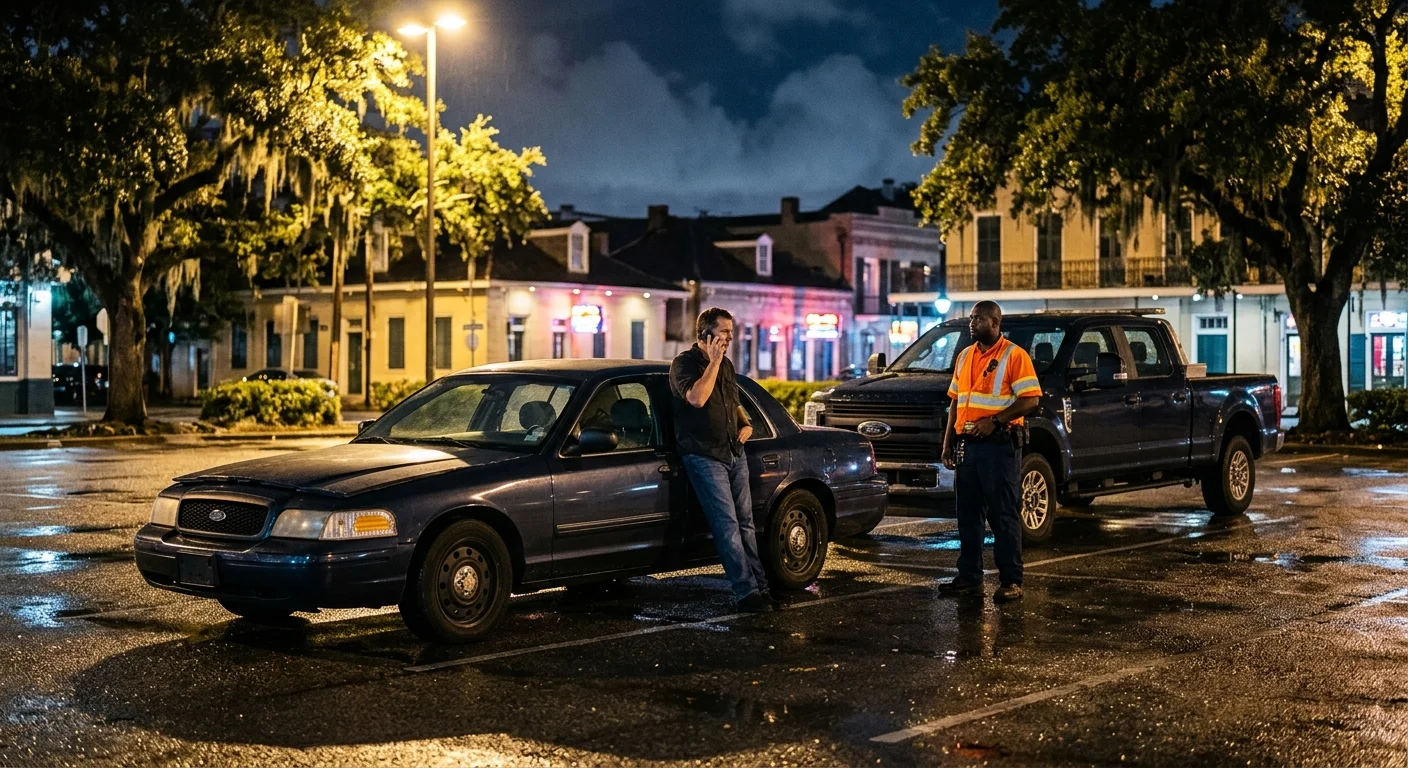
Call (504) 474-5530. The Quick Tow New Orleans line takes 24 hour roadside calls. We match you with a licensed local operator. We do not own the trucks.
Before you call, have this ready:
- Exact location: street and cross street, or highway, direction, and exit or mile marker.
- Vehicle: year, make, model, color, and whether it starts, rolls, or shifts to neutral.
- The job: jump, spare tire, fuel, lockout, or a tow, plus where the car needs to go.
- Hazards: live lane, standing water, kids in the car, or a crash scene with police.
The line being open does not promise a truck is free in your zone. The operator quotes the job before work begins.
The line takes calls around the clock
The Quick Tow New Orleans line takes calls 24/7, including holidays. We take your information and match you with an independent, licensed local operator. Quick Tow doesn’t own tow trucks, employ drivers, or perform roadside work.
That distinction matters when you’re searching for “24 hour roadside assistance near me.” The line’s availability doesn’t promise that an operator is available in your zone. It also doesn’t guarantee a particular service or arrival window. The matched operator must confirm the job before work begins.
Tell us what happened in plain terms. A dead battery, flat tire, empty tank, locked car, and disabled transmission require different help. If you’re unsure, describe what the car does when you try to start or move it. Don’t guess at a mechanical diagnosis.
Calls to the line are recorded after the caller hears a recording notice. A message left on the line is also recorded and transcribed so the call can be returned.
Our roadside assistance service covers the matching process for common breakdown requests. If the vehicle can’t be made movable where it sits, the request may need emergency towing instead. The independent operator will confirm what it can provide.
Calling after midnight follows the same intake process. Our guide to calling for towing after hours explains the towing side in more detail.
Report your exact location and vehicle condition
Start with where the vehicle is, not where your trip began. New Orleans streets can repeat across nearby communities, and parish lines affect how a location is described. “Near New Orleans” isn’t enough for a driver in Metairie, Kenner, Gretna, or Slidell.
Give the street name, direction of travel, and nearest intersection. On an interstate, include the highway, direction, exit, and visible mile marker. If you’re inside a parking structure, name the garage, level, entrance, and clearance sign. In a large lot, identify the business and the side of the building.
Next, describe the vehicle:
- Make, model, color, and approximate model year
- Whether it starts, rolls, steers, or shifts into neutral
- Which tire is flat, if that’s the problem
- Whether the key is inside the locked vehicle
- Whether the vehicle is in a traffic lane, shoulder, garage, or lot
- Any visible collision damage, leaking fluid, smoke, or standing water
Report unusual conditions before the operator accepts the work. A low garage ceiling, blocked wheel, damaged suspension, trailer, motorcycle, or loaded work vehicle can change the equipment needed.
New Orleans weather can also change the scene. Don’t describe a flooded crossing as merely “wet.” State whether water surrounds the car and whether the vehicle was driven into it. A roadside request can’t replace emergency services when someone is hurt or in immediate danger.
You can check 511 Louisiana for official information about incidents, closures, construction, cameras, and weather. Share any closure that affects access to your location.
A jump, fuel request, lockout and tow are different
“Roadside assistance” describes several different requests. The operator needs to know which problem it’s being asked to address. Clear information reduces the chance of matching you with the wrong type of service.
A jump request means the car isn’t starting and the battery may be involved. Report whether the lights work, whether the engine clicks, and whether you have already tried another key. A jump isn’t the same as diagnosing an electrical or charging problem.
For an empty tank, give the vehicle’s fuel type. Don’t assume gasoline and diesel are interchangeable. If the vehicle stopped after displaying another warning, report that too. The operator can decide whether a fuel request fits the situation.
For a lockout, say where the key is and whether a person or animal is inside. An occupied vehicle in danger is an emergency, not an ordinary roadside request. Contact 911 when immediate help is needed.
A tow becomes the clearer request when the car can’t safely continue or the roadside issue isn’t resolved. Tell the operator where you want the vehicle taken. A repair shop, residence, and secure parking location can create different access questions.
Louisiana DOTD’s Motorist Assistance Patrol provides minor free help on covered routes. Services include a flat-tire change, about a gallon of emergency fuel, a battery jump, radiator water, and help moving disabled vehicles from travel lanes. MAP is a scheduled patrol, not a call-out towing service, and it doesn’t tow vehicles away for repairs. If MAP isn’t already present, DOTD directs stranded motorists to local law enforcement, or 911 during an emergency.
Pay-per-call roadside, without a motor-club card, is also covered on our roadside help without AAA page. For more cost-focused options, read cheap roadside assistance in New Orleans.
Bridge and interstate locations need precise details
A breakdown on I-10 isn’t a single New Orleans location. I-10 crosses several parishes and connects LaPlace, Kenner, Metairie, central New Orleans, and New Orleans East. The direction, exit, and nearest landmark tell the operator which side of the metro you’re actually on.
The same applies to I-610 and US-90 Business. “Near downtown” could mean an elevated section, an interchange, or a surface street below it. State whether you’re on the highway itself, an exit ramp, or a nearby frontage road. If you can see an exit number, include it.
DOTD’s daytime MAP coverage runs from 5:30 a.m. to 7:30 p.m. It includes I-10 from US-61 in Ascension Parish to Michoud Boulevard, all of I-610, I-55 from I-10 to Manchac, and US-90 Business from the I-10 split to Westwood.
Night coverage runs from 7:30 p.m. to 5:30 a.m. It includes I-10 from US-51 at LaPlace to Morrison Road, all of I-610, and US-90 Business from Exit 234A to Barataria Boulevard. Those routes and hours leave gaps, so don’t assume a patrol will reach every New Orleans Metro breakdown.
The Lake Pontchartrain Causeway has its own procedure. The bridge is patrolled 24/7 by Causeway Police. A stranded motorist should call Causeway Police at *27 or (504) 835-3116. The Causeway’s official site also publishes its fog procedures.
During single-lane fog restrictions, its guidance says a disabled vehicle should reach a Crossover or Safety Bay when possible. If that isn’t possible, follow the Causeway Police instructions for the restricted lane and report your bridge location precisely. Don’t arrange an ordinary roadside meeting without first contacting the bridge authority.
Confirm the matched operator’s service before work begins
Once you’re matched, speak directly with the independent operator about the requested work. Confirm the operator’s business name, the vehicle, the location, and the service it has agreed to consider. If the situation changed while you waited, say so before work begins.
Ask whether the request is being treated as a jump, lockout, fuel delivery, tire service, recovery, or tow. Those labels aren’t interchangeable. A car resting in mud, standing water, a traffic lane, or a low-clearance garage may need different handling from a car parked normally.
Discuss charges and payment directly with the operator. Quick Tow doesn’t set operator prices, collect payment for the work, or promise a total. Ask the operator how charges are calculated and whether any condition at the scene changes them. If towing is required, confirm the destination before the vehicle is moved.
Also confirm what access the operator needs. Mention locked gates, garage height limits, tight courtyards, missing keys, blocked wheels, and property rules. For a repair shop destination, check whether the shop can receive the vehicle at that hour. That’s separate from the roadside operator’s availability.
Don’t authorize work you don’t understand. Ask the operator to explain the planned service and any paperwork before starting. Keep your own copy of anything you sign or receive.
The phrase “24 7 roadside assistance near me” often suggests one universal service. In practice, the first useful step is accurate intake. Your location, vehicle condition, and requested outcome give the matched operator enough information to decide whether it can take the job.
When to call us
Call when your vehicle needs roadside help or a licensed towing operator, and you’re ready to describe its location and condition. Call (504) 474-5530. We match you with a licensed local operator who quotes before the truck rolls.