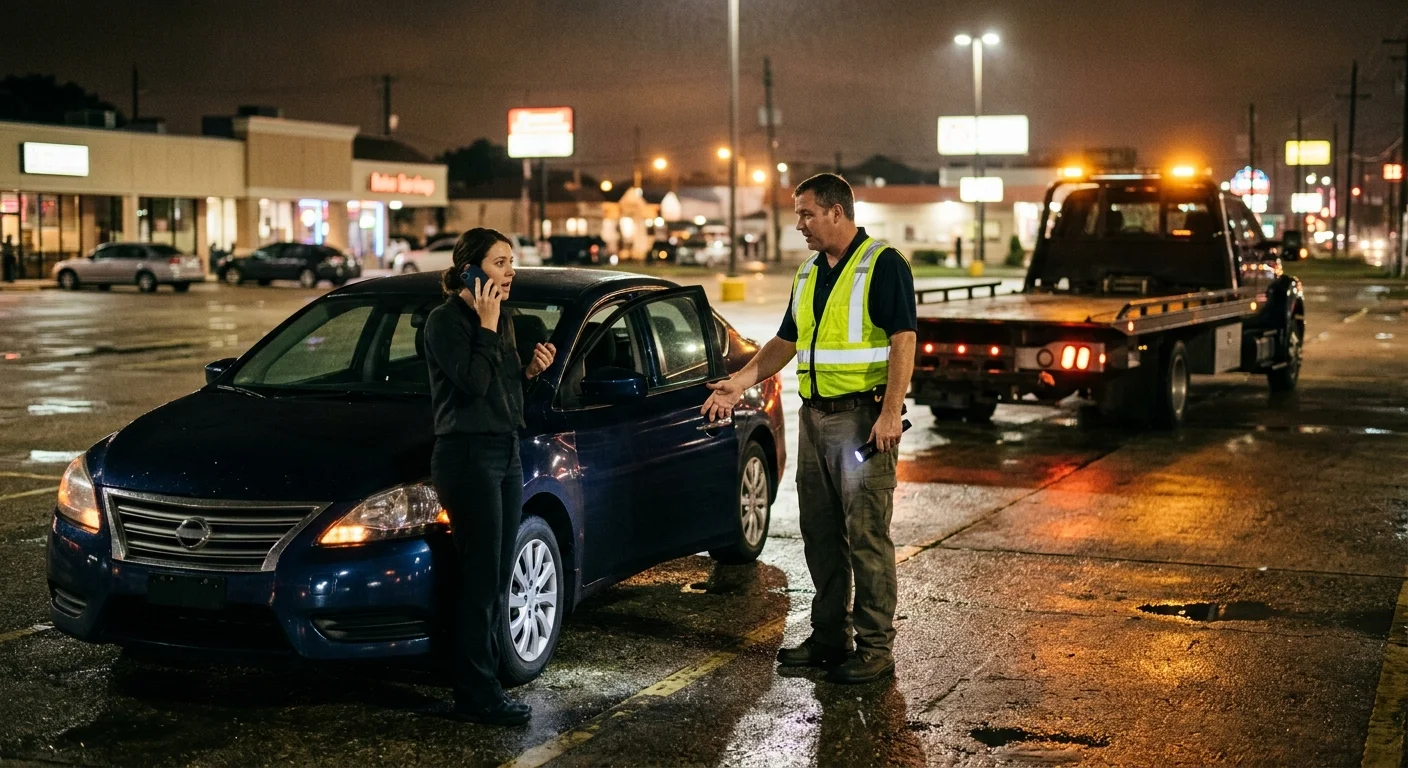
Yes. You can call (504) 474-5530 after hours. The Quick Tow New Orleans referral line takes calls 24 hours a day, seven days a week, including holidays. We match you with a licensed operator who quotes the job before the truck rolls. That is not an arrival time and not a fleet count. For West Bank geography only, see 24-hour towing in Marrero.
What 24/7 means for this referral line
When people check towing hours, they’re often asking two different questions. They want to know whether they can call now. They also want to know whether a suitable tow operator is available nearby.
Quick Tow New Orleans answers the first question. Our line takes calls around the clock. We gather the job details and match callers with independent, licensed local operators. Quick Tow doesn’t own tow trucks, employ drivers, or operate a storage yard.
That distinction matters during an after-hours breakdown. A search for 24 hour towing in New Orleans may show referral lines, individual operators, impound lots, and roadside programs. Those services don’t necessarily keep the same hours or perform the same work.
Our phone system may take a recorded message when needed. Callers hear a recording notice before recording begins. Messages can be transcribed so the call can be returned.
Calling the line also doesn’t commit you to a particular service. A dead battery or flat tire may need roadside assistance instead of a tow. A damaged wheel, collision, or disabled drivetrain may require an operator with different equipment.
Our emergency towing referral service helps identify those needs. The matched operator performs the physical work and handles the service agreement directly with you.
After-hours availability isn’t an arrival promise
A line that takes calls 24/7 isn’t an arrival guarantee. It also doesn’t mean every operator works every hour.
Each independent operator has its own schedule, service area, equipment, and current workload. The right match can depend on your vehicle, destination, and exact location. A sedan in an open Metairie parking lot presents a different job from an SUV inside a downtown garage.
Night conditions can also change the information an operator needs. Traffic may be moving quickly near the Westbank Expressway. A garage may have a locked entrance or low posted clearance. A vehicle on a bridge shoulder may require contact with law enforcement before an independent tow can approach.
Weather can complicate the scene as well. Heavy rain may hide curbs, debris, and standing water. Don’t enter floodwater or ask an operator to retrieve a vehicle from an unsafe area without explaining the conditions first.
The safest approach is simple. Describe the situation accurately, then ask the matched operator whether the job can be accepted. Confirm the operator’s current availability directly. Don’t plan around a guessed arrival time.
Can I schedule a tow for later
You can tell us a future pickup time when you call. Only the matched independent operator can confirm that it accepts that schedule, the equipment, the destination, and the price. A message on the line is not a booked appointment.
If you’re blocking a travel lane or facing immediate danger, contact emergency services first. Move away from traffic when you can do so safely. Towing arrangements come after the immediate hazard is addressed.
What location details matter at night
“Near downtown” or “somewhere on the West Bank” won’t give an operator enough information. New Orleans streets, parish lines, bridges, and divided highways can make a vague location hard to interpret.
Start with the street, nearest cross street, and travel direction. On an interstate or expressway, share the route, direction, nearest exit, and visible landmark. Near the Westbank Expressway, say whether you’re eastbound or westbound. Also explain whether the vehicle is on a shoulder, ramp, frontage road, or nearby lot.
Your phone’s map pin can help, but add plain-language directions. A pin may land on the wrong side of a divided road. It may also identify the elevated roadway when you’re underneath it.
Tell the operator about the scene itself:
- Is the vehicle in a travel lane, shoulder, garage, driveway, or parking lot?
- Are any gates, bollards, height bars, or locked entrances present?
- Does the vehicle roll and steer?
- Are the keys available?
- Is a wheel damaged, missing, or unable to turn?
- Is the vehicle carrying a trailer?
- Are you beside the vehicle or calling from somewhere safe?
Give the correct vehicle year, make, model, and drivetrain when known. Mention an electric vehicle, motorcycle, low-clearance car, or oversized vehicle early. Those details help determine which independent operator may be equipped for the job.
Keep your phone nearby after sharing the location. The matched operator may need clarification about an entrance, ramp, or destination before accepting the tow.
Parking garages and bridge shoulders need different details
Downtown parking garages need more detail than open lots. A disabled car near Poydras Street may sit several levels above the entrance. The operator needs the garage name, entrance street, floor, parking space, and posted clearance.
Explain whether the vehicle can reach the exit under its own power. Mention tight turns, steep ramps, a locked gate, or wheels that won’t move. Don’t guess the clearance. Read the posted sign when it’s safe.
Garage staff may control access after normal business hours. Ask whether an attendant or building representative must open the entrance. Keep your parking ticket or access information available. The matched operator can then decide whether the site and vehicle fit its equipment.
A bridge shoulder is a different situation. On the Lake Pontchartrain Causeway, contact Causeway Police when your vehicle becomes disabled. The bridge is patrolled around the clock, and officers coordinate safety on the crossing. Don’t walk along the bridge or stand close to moving traffic.
The I-10 Twin Span also requires an exact direction and approximate position. Contact emergency services when the vehicle is exposed to traffic. An operator shouldn’t be treated as the first safety response to an active roadway hazard.
Louisiana DOTD’s Motorist Assistance Patrol provides minor help along covered routes on fixed patrol schedules. It isn’t an on-demand towing service, and it doesn’t tow vehicles away for repair.
Our guide to breakdowns on I-10 and the Causeway explains the local safety steps in more detail.
What to confirm with the matched operator
Once an independent operator accepts the job, confirm the agreement directly. Quick Tow makes the connection but doesn’t set the operator’s prices, payment terms, working hours, or service policies.
Start with the pickup and destination. Give full location details for both. If you don’t have a repair shop selected, ask where the vehicle would be taken before the hookup begins. Don’t assume it will go to the nearest shop or remain on the operator’s property.
Confirm these points when the situation allows:
- The operator can handle your vehicle and its current condition.
- The operator can enter the garage, lot, or gated property.
- The pickup and delivery locations are correct.
- You know who must be present and whether keys are required.
- The operator has explained its charges and accepted payment methods.
- You understand where the vehicle will be stored, if storage is involved.
- Any offered warranty terms are provided by the operator.
A private tow operator’s hours aren’t the same as a city impound lot’s hours. If your parked car disappeared, first determine whether the City removed it. The City’s Find My Towed Vehicle page lists the Claiborne release lot’s posted hours. Confirm current access directly before traveling there.
This step prevents a wasted trip after dark. A referral line may still be open while a destination, repair shop, garage office, or release counter is closed.
Read the operator’s paperwork before authorizing the tow. Ask about anything that isn’t clear. You’ll contract with and pay the independent operator directly.
When to call us
Call when a disabled vehicle needs a licensed towing professional and basic roadside help won’t solve the problem. Share your vehicle, location, access conditions, and destination when known.
Call (504) 474-5530. We match you with a licensed local operator who quotes before the truck rolls.