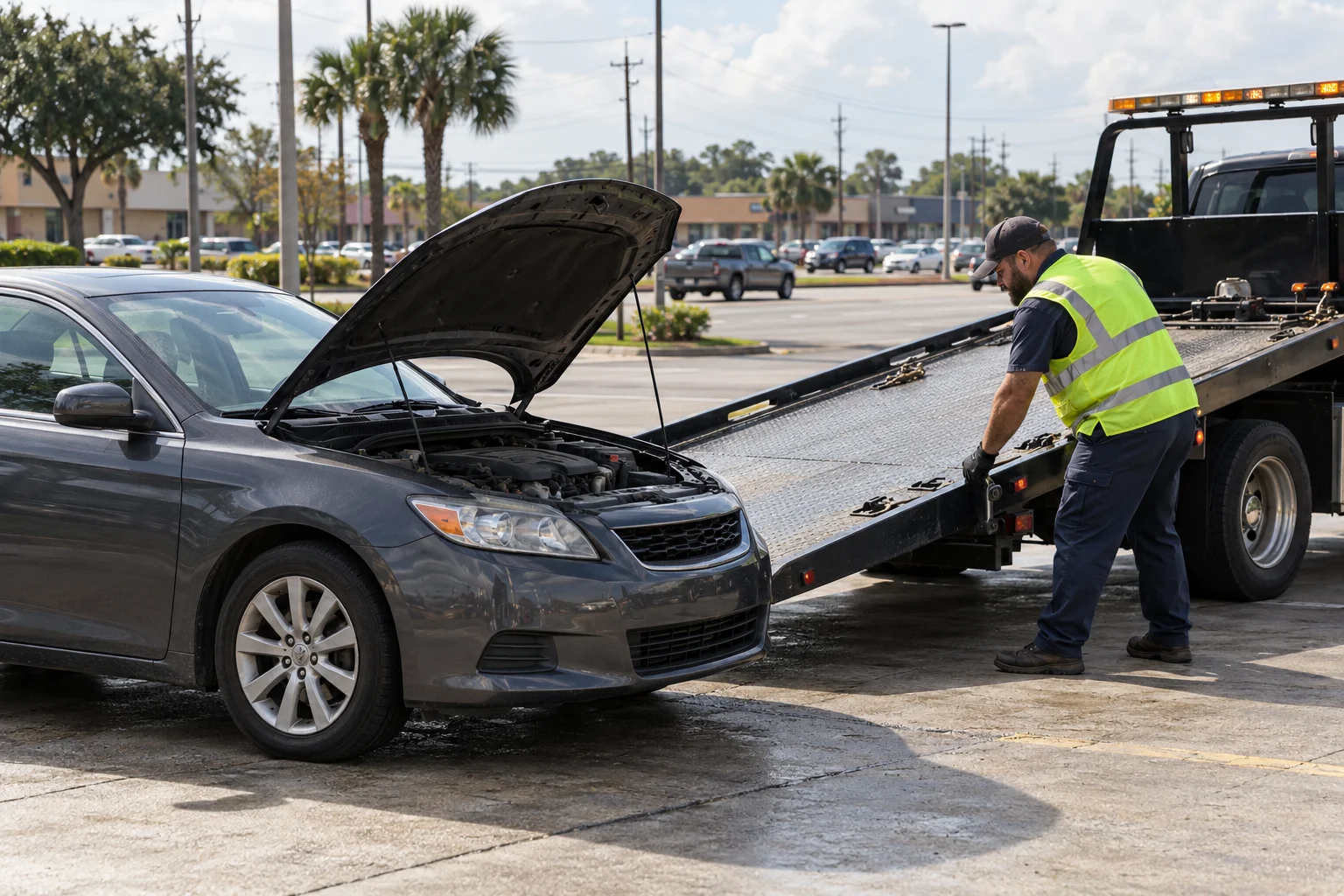
A car breakdown in Terrytown, LA, starts with one decision: roadside help or a tow. The answer depends on the car’s condition, your exact location, and whether a small repair can safely get it moving.
Quick Tow New Orleans matches drivers with independent, licensed local operators. The line takes calls 24/7, but the operator determines what equipment and service the situation requires.
Start with the car’s condition and exact location
Before requesting help, identify what happened and where the car stopped. Those details help an operator decide whether to bring roadside equipment or towing equipment.
Start with the basics:
- Is the engine running?
- Will the car shift into neutral?
- Are any wheels damaged or locked?
- Is there smoke, leaking fluid, or a strong fuel smell?
- Did a warning light appear before the car stopped?
- Is the vehicle blocking traffic?
- Is it safely parked on private property?
Give a street name, nearby business, or recognizable intersection. A phone map pin can help when storefront addresses aren’t visible. Say whether you’re on Behrman Highway, Terry Parkway, or a smaller neighborhood street. Also mention which direction the car was traveling.
Your description doesn’t need to diagnose the failure. “The engine turns but won’t start” is more useful than guessing the fuel pump failed. Likewise, report that a wheel sits at an angle instead of naming a suspension part.
Photos can clarify tire damage, wheel position, and available space. Include the car’s year, make, model, and drive type if known. Mention low ground clearance, an electric drivetrain, or modifications that could affect loading.
Behrman Highway and neighborhood streets differ
A breakdown on Behrman Highway isn’t the same as one in a Terrytown driveway. Traffic, shoulder space, parking access, and the car’s position can change the service choice.
On a busy road, personal safety comes first. Check Louisiana 511 for reported incidents or traffic trouble affecting the wider route.
A car inside a paved parking lot may offer more working room. That can make a battery check, tire change, or other limited roadside service more practical. Permission may still matter if the lot belongs to a business or residential property.
Neighborhood streets introduce different access concerns. Tell the operator about narrow parking space, parked cars, gates, low branches, or a tight driveway. A car facing the wrong direction in a confined space may require a different loading approach.
Location also affects where the vehicle should go. Terrytown sits within the West Bank travel pattern linking nearby Gretna and Algiers. Crossing toward another part of the metro without choosing a destination first can create confusion after loading.
Drivers closer to Gretna may find our guide to a car breakdown in Gretna helpful. Those nearer the Orleans Parish side can compare the considerations covered in car breakdown help for Algiers. Each area has different streets and destination choices, even when the mechanical problem looks identical.
When roadside help may fit
Roadside help may fit when the vehicle has one limited problem and is otherwise safe to drive. Common examples include a weak battery, a flat tire with a usable spare, an empty fuel tank, or keys locked inside.
A jump-start can test whether a discharged battery is the immediate problem. It doesn’t prove the battery or charging system is healthy. If the engine starts but warning lights remain, the safer choice may still be transport to a repair shop.
A tire change may fit when the spare, wheel, and lifting point are usable. Sidewall damage, a bent wheel, missing wheel hardware, or damage around the suspension can turn a tire call into a tow. Tell the operator if the car struck a curb or pothole before the tire failed.
Fuel delivery may get a gasoline-powered vehicle moving after an empty-tank mistake. If the gauge showed fuel or the engine died while driving normally, don’t assume the tank is empty. The failure may need diagnosis elsewhere.
Lockout help may fit when the keys are visible inside and the vehicle has no related damage. Tell the operator if a child, vulnerable person, or animal is locked inside.
Our roadside assistance service covers the information callers should have ready. A roadside attempt should solve a limited problem without hiding a larger one.
When the car may need transport
A tow may be the better choice when the car can’t be driven safely. That includes collision damage, steering problems, a broken axle, severe overheating, major fluid loss, or wheels that won’t roll normally.
Dashboard warnings also need context. A single light doesn’t always explain the breakdown. Report the symbol, its color, and what the car did afterward. Tell the operator whether the engine stalled, lost power, shook, or made a new sound.
The car’s loading condition matters too. Say whether it shifts into neutral and whether the parking brake releases. Mention an electric vehicle, all-wheel drive, very low bodywork, or wheel damage. The licensed operator can choose suitable towing equipment from that information.
A tow is also sensible when roadside help restores power but not dependable operation. For example, an engine may restart after a jump and then stall again. Moving it to a repair facility avoids gambling on another breakdown along Terry Parkway or while traveling toward Gretna.
Our emergency towing service guide explains what to report when the car needs transport. Quick Tow New Orleans doesn’t perform the tow. We match the caller with an independent operator, and the driver contracts with and pays that operator directly.
Choose a West Bank destination before it moves
Choose the destination before the operator loads the car. That reduces confusion and helps everyone understand the requested trip.
A repair shop isn’t automatically ready to receive a disabled vehicle. Call the shop first when possible. Confirm that it works on the vehicle’s make, drivetrain, or specific problem. Ask where disabled cars should be left if the service entrance isn’t obvious.
If the shop is closed, don’t assume the operator can leave the car there. A locked gate, crowded lot, or posted parking restriction may prevent delivery. Get instructions from the property before choosing an unattended drop-off.
Your home may work when the vehicle can be parked legally and safely. Check that the driveway has enough room and that the car won’t block a sidewalk, shared access point, or another vehicle. Mention steep slopes, gates, narrow turns, or low clearance before transport begins.
Think about geography as well as distance. A destination in Gretna may make sense for one Terrytown driver. Another may already use a shop in Algiers. Decide whether familiarity, repair capability, or access matters most.
Remove essential belongings before the car moves when it’s safe. Take your keys, wallet, medication, work equipment, and child seats if needed. Photograph the vehicle’s condition and confirm the destination with the operator.
Don’t choose a destination based only on the nearest map result. A clear plan matters more than improvising after the vehicle is secured.
When to call us
Call when a Terrytown breakdown may need roadside help or transport by a licensed towing professional. The line takes calls around the clock and matches callers with independent local operators.
Call us at (504) 474-5530 and we’ll connect you with a licensed local operator.