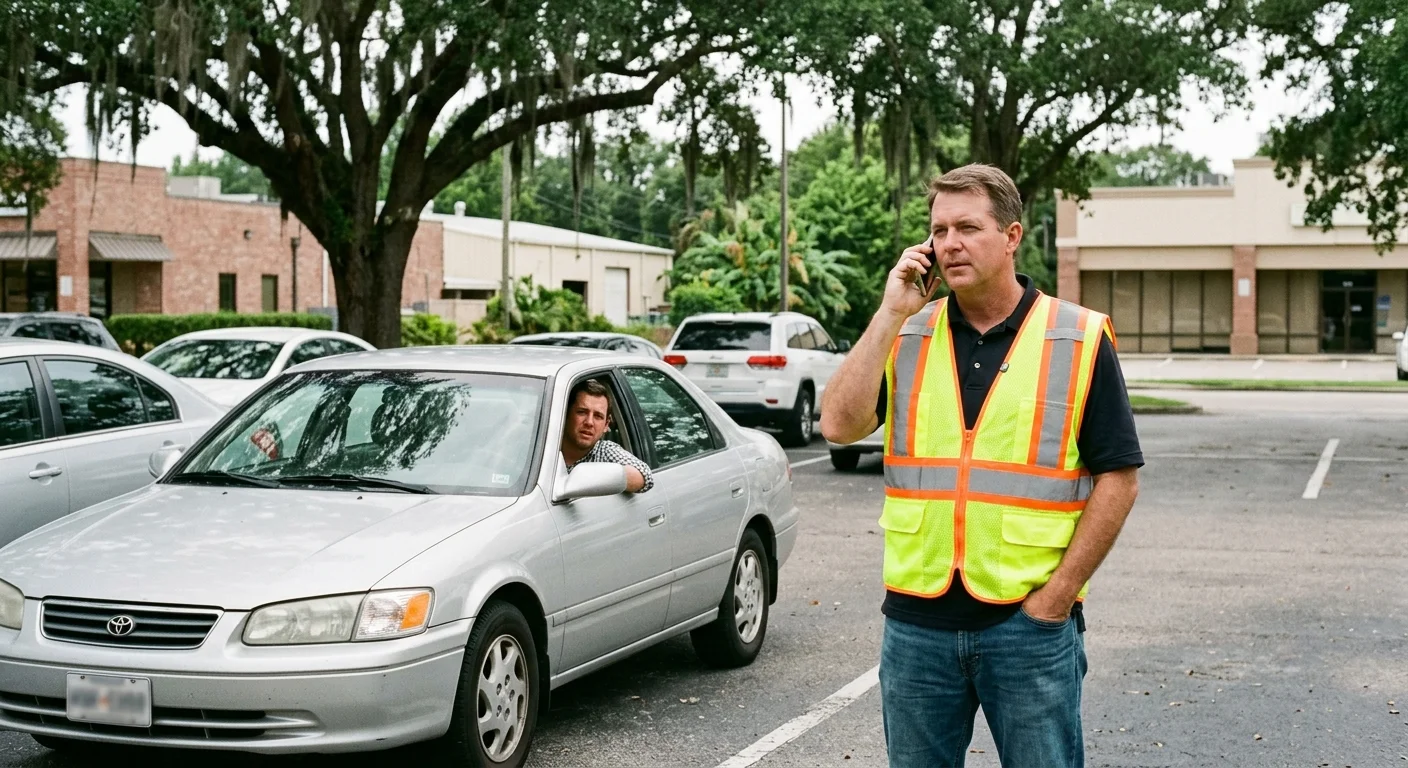
Locksmith versus towing: ask for car lockout first when the key is inside and the car can stay put. Report make, whether the key is in the trunk, whether the engine is running, and garage clearance. A tow is the better request when the car must move or the door cannot be opened safely. We do not promise non-destructive entry.
Start with whether the key is visible and the car is secure
Look through each window without pulling hard on the handles. Tell the operator where you can see the key. It might be on the seat, in the ignition, or inside the trunk area. That detail helps the operator understand the lockout before touching the vehicle.
A visible key doesn’t mean every car can be opened the same way. Door frames, glass, locks, alarms, and electronic systems vary. Some vehicles also detect that a smart key is inside. Give the operator the vehicle’s year, make, and model so they can assess the right approach.
Next, consider the car’s location. A locked sedan in a well-lit Metairie parking lot presents a different problem than one beside moving traffic near the CBD. Stay out of travel lanes and loading areas. If you’re on a shoulder, stand somewhere protected from traffic when possible.
Don’t attempt forced-entry tricks found online. Improvised wedges, wire, and hard pulling can harm weather seals, wiring, glass, or door hardware. An unlocked window also doesn’t make reaching inside safe.
Check whether anyone vulnerable is trapped inside. If a child, pet, or another person appears distressed, call 911. Don’t wait for routine roadside service during an immediate emergency.
If the car is secure and nobody is at risk, gather your identification and ownership details. An operator may ask for them before providing access. You should also locate a spare key or a manufacturer-approved app if one was already set up. Those options may solve the problem without opening or moving the vehicle.
Why a lockout and a tow are different requests
A lockout request is meant to regain access while leaving the car where it sits. A towing request is meant to move the vehicle. For keys locked inside a functioning car, roadside assistance is usually the service to request first.
The operator still needs to inspect the vehicle. No responsible referral service can promise that every lockout will be completed without damage. Existing door damage, an electronic lock fault, or an unusual security system can change what is safe.
Towing becomes relevant when the key is missing, broken, or unusable. It may also be needed when the vehicle can’t remain where it is. Examples include a blocked garage lane, an unsafe roadside position, or a location that must be cleared. In those cases, ask about emergency towing and explain that the doors are locked.
A tow truck may not solve the underlying key problem. You could still need a replacement key, dealer support, or another qualified service after the car reaches its destination. Decide where the vehicle should go before authorizing a tow.
Roadside help also doesn’t always require a motor-club plan. Our guide to roadside assistance without a membership explains how direct service requests differ from membership benefits.
Don’t rely on a highway patrol program for a routine parking-lot lockout. The Louisiana DOTD Motorist Assistance Patrol is a fixed-schedule patrol, not a call-out service. Its role and coverage differ from an operator requested for a specific locked vehicle.
What vehicle and location details the operator needs
Start with the vehicle’s year, make, model, color, and body style. Say whether the key is visible and where it rests. Mention whether it’s a metal key, remote fob, or smart key. Also tell the operator if the engine is running, an alarm is active, or any door already has damage.
Explain what happened without guessing about the cause. The doors may have locked automatically, the trunk may have closed with the key inside, or the fob may have stopped responding. Clear details help the operator prepare for the actual problem.
Give a precise location. In a downtown garage, share the garage name, entrance street, level, and space number. Note any posted height clearance before requesting a vehicle that may need towing. A photo of the clearance sign or entrance can help the operator assess access.
On a French Quarter street, provide the nearest cross street and which side of the block holds the car. A map pin alone can place someone on the wrong side of a one-way block. Mention temporary barriers, heavy pedestrian traffic, or curb access that could prevent a service vehicle from stopping nearby.
For a neighborhood lot in Mid-City, Gentilly, Kenner, or the Westbank, mention gates, access codes, security booths, and parking restrictions. If the property manager controls entry, contact them before the operator arrives. Permission to enter isn’t the same as permission to work on or move a vehicle.
If road conditions or closures affect access, check 511 Louisiana before choosing a meeting point. Don’t stand beside the vehicle if doing so puts you near moving traffic. Give the operator a safe place to contact you if you need to wait elsewhere.
Garages and narrow streets can change access
Downtown garages can limit which service vehicles reach a locked car. Low ceilings, tight turns, steep ramps, and narrow exit lanes all affect access. A truck that works in an open lot may not fit inside. Share posted clearance information before the operator decides what equipment is suitable.
Tell garage staff that you need roadside help. They may control gates, elevators, reserved levels, or service entrances. Ask where an operator can park without blocking traffic. If towing becomes necessary, the operator and garage staff may need to plan how the vehicle reaches an open loading area.
The French Quarter creates another kind of access problem. Narrow streets, one-way blocks, parked vehicles, delivery activity, and pedestrians can leave little working space. Give the exact block and nearest intersection. If you’re near a courtyard entrance or private garage, explain whether the vehicle is inside or along the curb.
CBD and Warehouse District garages can also have multiple entrances on different streets. The entrance used by customers may not lead directly to your level. Send simple directions from the correct entrance instead of relying only on the garage’s mailing address.
Apartment and shopping-center lots may look easier, but gates and property rules still matter. Confirm that an operator can enter and stop near the car. Don’t ask anyone to block a fire lane, driveway, or active travel lane.
Access problems don’t automatically mean the car must be towed. They mean the operator needs accurate information before choosing an approach. If the vehicle does need moving, explain whether its wheels are turned, the parking brake is set, or the transmission can’t be shifted. If you don’t know, say so.
What to confirm before work begins
Confirm whether you’re authorizing a lockout attempt or a tow. These are different services with different outcomes. Ask the independent operator to explain the proposed work before it begins. You should understand what happens if access can’t be completed safely.
Ask the operator directly about the charge and accepted payment methods. Quick Tow New Orleans is a referral service. We take the calls and match callers with independent, licensed local towing and roadside operators. The caller contracts with and pays the matched operator directly.
Don’t assume an initial lockout request includes towing. If the service must change, pause and confirm the new scope. Ask what work has already been completed and what the next service covers. Our guide to cheap roadside assistance in New Orleans explains what to compare when cost matters.
For a tow, confirm the destination before loading begins. Give the full address and verify that someone can receive the vehicle. If you’re sending it to a dealer, repair shop, or private property, check whether that location can accept it.
Remove loose valuables when you can do so safely after access is restored. If the vehicle remains locked, tell the operator about medication, identification, work equipment, or other needed belongings. Don’t assume a tow includes passenger transportation. Ask the operator what arrangements are available before anyone gets into a service vehicle.
Finally, verify the operator’s business name and keep any paperwork provided. Read the service authorization before signing. If the operator discusses possible damage, limits, or workmanship terms, make sure those terms come from that operator. Quick Tow doesn’t warrant an independent operator’s work.
When to call us
Call when the car can’t be opened safely, the key is damaged or missing, or the vehicle needs a licensed towing pro to move it. The Quick Tow New Orleans line takes calls 24/7, and we match callers with independent, licensed local towing and roadside operators. Call (504) 474-5530. We match you with a licensed local operator who quotes before the truck rolls.