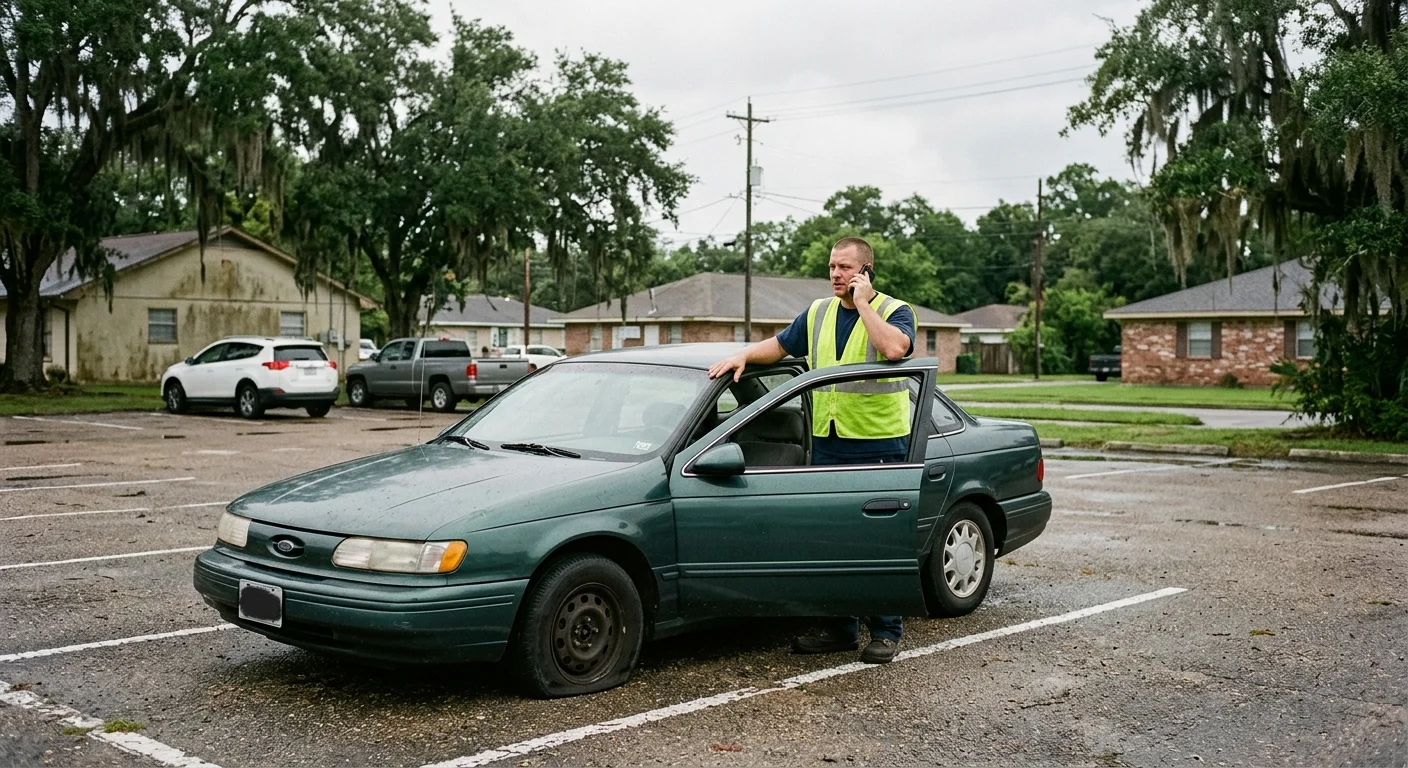
Pay-per-use versus a club card. If the job becomes a tow, our published light-duty hookup is $95, not a complete total. See roadside without AAA and what to report.
The short answer for drivers without a motor-club plan
A motor-club membership isn’t required to ask for roadside help. Drivers can contact an independent roadside operator and pay for the requested service directly. This arrangement is commonly described as pay-per-call roadside assistance.
Start by identifying the actual problem. A dead battery, flat tire, empty fuel tank, or locked vehicle may need a roadside service. A damaged vehicle, failed transmission, or car that can’t roll safely may need a tow instead.
Your location also changes the safest next step. A stalled car in a Metairie parking lot presents a different problem from one blocking traffic on I-10. Move away from active traffic when you can do so safely. Call 911 when the breakdown creates an immediate danger.
Louisiana also has a free public-help layer on selected highways. The DOTD Motorist Assistance Patrol patrols fixed routes on a set schedule. It isn’t a roadside service that motorists can summon directly.
MAP may change a flat tire, provide emergency fuel, jump-start a battery, or help clear a disabled vehicle from a travel lane. If a patrol unit isn’t already present, a stranded motorist should contact local law enforcement. MAP doesn’t tow vehicles away for repair, and its coverage leaves route and schedule gaps.
For help outside that public program, review your options for roadside assistance in New Orleans. Quick Tow New Orleans can match you with an independent, licensed local operator. Quick Tow performs no roadside work itself.
Membership coverage and pay-per-call help are different
A membership and a direct service request are two separate arrangements. With a motor-club plan, your eligibility depends on that plan’s current terms. With pay-per-call help, you request a specific service and deal directly with the operator.
Membership terms can vary by plan. Don’t assume a service is included because you carry a membership card. Check which vehicle or person is covered, which services qualify, and whether your location changes the benefit. Confirm any limit or restriction directly with the club.
Pay-per-call roadside assistance can make sense when you don’t have a plan, rarely need help, or can’t confirm coverage. Before accepting service, ask the operator what work is being authorized and how payment will be handled. Quick Tow doesn’t set the independent operator’s prices or collect payment for the operator.
The choice becomes more urgent along busy New Orleans routes. A battery failure near a neighborhood business gives you room to compare options. A disabled vehicle beside I-610, US-90B, or the Westbank Expressway requires attention to traffic and personal safety first.
Drivers searching for lower-cost roadside assistance options should compare the whole situation, not just one advertised figure. Ask whether the request is roadside service or towing. Give an accurate location and describe the vehicle’s condition. A vague request can lead to the wrong equipment being sent.
Membership isn’t the deciding factor. The real questions are whether a provider serves your location, can handle the problem, and clearly explains the transaction before work begins.
Where insurance, warranties and credit cards may fit
Louisiana requires drivers to carry liability insurance, but state law doesn’t require towing or roadside coverage. Coverage for a breakdown depends on the driver’s own contract. That may be an optional roadside or towing endorsement, not the basic liability policy.
Start with the policy declarations and endorsement pages. Look for terms such as “roadside assistance” or “towing and labor.” Then call the insurer using the contact information printed on your policy or insurance card. Ask whether you must request help through its system or may choose an operator and seek reimbursement.
Our guide to towing coverage under Louisiana auto insurance explains that distinction in more detail. State law doesn’t create a general towing benefit for drivers. Your policy controls whether a tow bill qualifies.
A vehicle warranty may have separate roadside terms. Check the warranty booklet or the manufacturer’s current benefits page. Confirm that your vehicle and the specific breakdown qualify. Don’t assume the warranty follows every owner or remains active for the vehicle’s entire life.
Credit-card benefits require the same care. Review the current guide to benefits tied to your exact card. Ask whether roadside help is included, discounted, arranged through a separate provider, or excluded. The card’s customer-service team should confirm the terms before you depend on them.
Drivers also ask, “Can I get roadside assistance without insurance?” If that means without roadside coverage on an insurance policy, direct-pay help remains a separate option. It doesn’t replace required auto liability insurance or make an uninsured vehicle legal to drive.
Keep notes from every benefits call. Record what service was authorized and what documents the plan requests. If the terms aren’t clear, treat coverage as unconfirmed until the plan administrator answers.
What to confirm before requesting roadside help
Good information helps the operator understand the job. Start with your location, vehicle, problem, and immediate surroundings. In metro New Orleans, include the parish and a clear landmark when possible.
“Near New Orleans” isn’t precise enough. Say whether you’re in Orleans Parish, Metairie, Kenner, Gretna, Terrytown, or across Lake Pontchartrain. On a highway, provide the route, direction of travel, nearest exit, and whether the vehicle is in a travel lane, shoulder, parking area, or safer nearby location.
Describe the vehicle without guessing at the failure. Give its make, model, approximate size, and visible condition. Say whether it starts, shifts into neutral, rolls, steers, or has a damaged wheel. Mention a trailer, low clearance, all-wheel drive, collision damage, or blocked access.
Then confirm the service being requested. A roadside call might involve a jump-start, tire change, lockout, or emergency fuel. Don’t authorize a tow when you only requested a battery check unless the operator explains why towing is needed and you agree.
Before work begins, ask the independent operator:
- What service are you authorizing?
- Who will receive payment?
- What could change the final charge?
- Does the vehicle need special towing equipment?
- Where will the vehicle go if it must be towed?
- What proof of service will you receive?
If you may have insurance, warranty, credit-card, or club benefits, contact that provider first when circumstances allow. Ask whether prior authorization is required. Confirm whether it arranges the service or expects you to pay the operator directly.
Quick Tow New Orleans is a referral service. The line takes calls 24/7, including holidays. We match callers with independent, licensed local operators, but we don’t perform the work, set operator prices, or warrant an operator’s service.
When the problem needs a tow instead
Roadside assistance is meant for a problem that can be handled where the vehicle sits. A usable spare tire, accessible battery, simple lockout, or empty fuel tank may fit that category. The operator still needs an accurate description before deciding what equipment the job requires.
Towing becomes the better request when the vehicle can’t be made safe to drive at the scene. Collision damage, failed steering, a wheel that won’t turn, or a vehicle stuck off the roadway can change the job. Don’t keep driving a vehicle that can’t be controlled safely.
Location matters here too. On the Lake Pontchartrain Causeway, follow Causeway Police guidance for a disabled vehicle. The bridge has its own police department, crossovers, safety bays, and procedures during fog restrictions. A driver stranded there shouldn’t treat the situation like a routine parking-lot breakdown.
On I-10, I-610, or US-90B, tell the operator exactly where the vehicle rests. If it’s blocking a travel lane or exposed to moving traffic, call 911. Personal safety comes before comparing plans or checking reimbursement terms.
Floodwater creates another boundary. Don’t drive into or attempt a roadside repair in moving water. Conditions can hide road damage and move a vehicle. Get away from danger when it’s safe, then contact emergency authorities.
A tow may also be necessary when a roadside attempt doesn’t solve the failure. Decide where the vehicle should go before authorizing transport. That destination might be a repair shop, dealership, home, or another legal location approved by the property owner.
Tell the operator about access limits at both ends. Narrow streets, parking garages, gated lots, and tight Westbank apartment parking can affect equipment choices. Accurate details help the operator decide whether the requested job is roadside help or towing.
When to call us
Call when a breakdown can’t be resolved safely at the roadside or the vehicle needs a licensed towing professional. Call (504) 474-5530. We match you with a licensed local operator who quotes before the truck rolls.