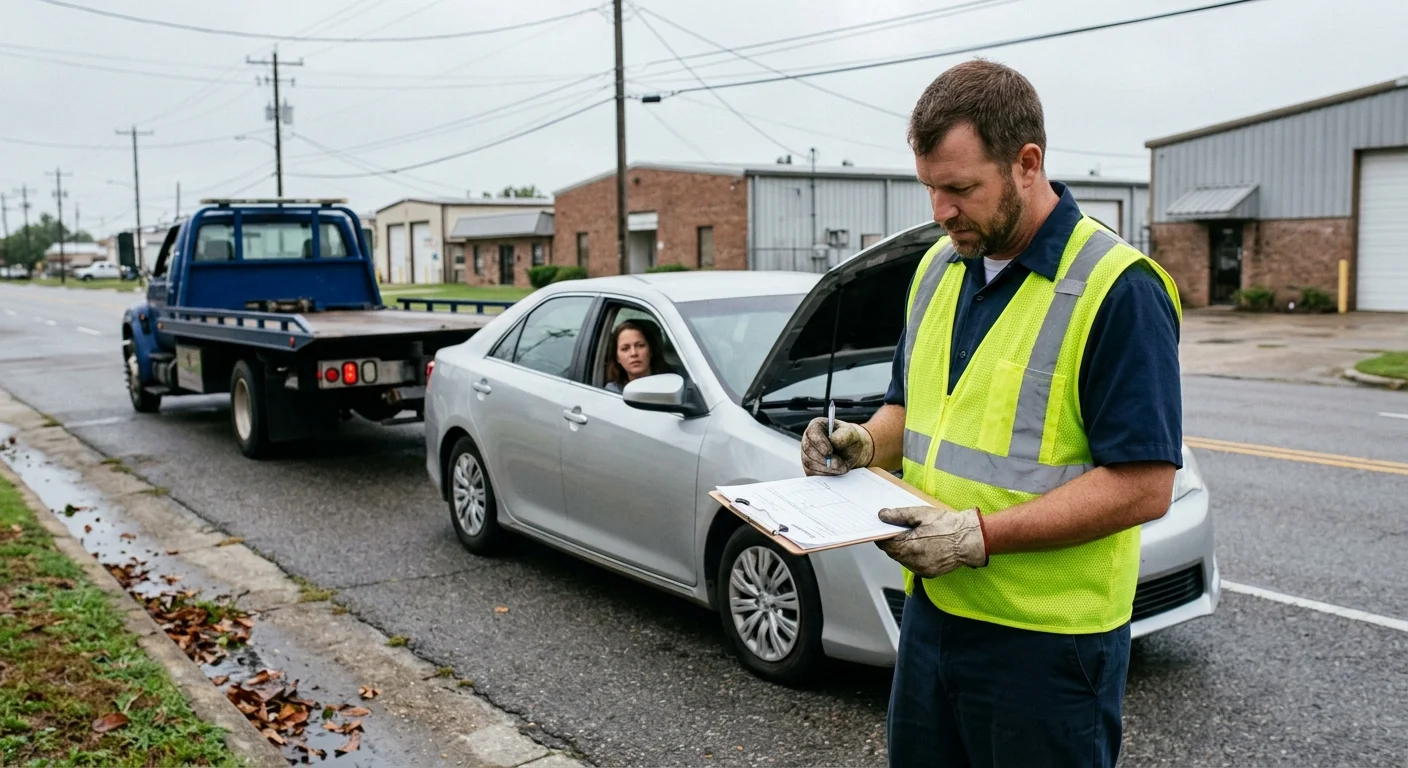
A search for a “$50 tow truck near me” usually starts with a stressful breakdown. The honest answer is that a complete $50 local tow in metro New Orleans couldn’t be confirmed from the available records. Before the vehicle is loaded, ask the independent operator what the advertised amount actually covers.
Quick Tow New Orleans is a referral service. We match drivers with licensed local operators, but we don’t perform tows or set operator prices. Our published light-duty hookup starts at $95. That is the hookup charge, not a $50 total and not a complete tow price. Confirm the full quote with the operator.
The advertised number may not cover the full request
A $50 towing ad doesn’t explain the whole transaction. That number may describe one part of the service, a limited offer, or an outdated listing. Unless the operator defines it, you don’t know whether it includes loading, mileage, equipment, or the trip to your destination.
Start by asking one direct question: “What is the full charge to move this vehicle from here to my chosen destination?” Give the exact pickup and drop-off locations. Also describe the vehicle before asking for a total.
Those details matter. A disabled sedan parked on a level street isn’t the same job as a locked vehicle inside a low garage. A car that rolls and steers may require different handling than one with damaged wheels.
Ask whether the stated amount includes:
- The hookup or loading charge
- Mileage or travel between both locations
- Special equipment needed for the vehicle
- Parking garage or access complications
- Taxes and card-processing charges
- Cancellation charges after an operator starts traveling
Don’t assume that “from $50” means the vehicle reaches its destination for $50. The word “from” leaves the final amount open. If the ad doesn’t state its limits, ask the operator to explain them before loading begins.
For a breakdown that requires towing rather than minor roadside help, review how much a tow costs in New Orleans and the tow cost calculator. The $95 figure on this site is a light-duty hookup, not a complete tow and not a City storage or boot charge. The line takes calls around the clock and matches you with the operator covering your zone.
Distance and vehicle condition can change the charge
“Local” can describe very different trips across metro New Orleans. Moving a car between the CBD and Mid-City isn’t the same route as crossing from Orleans Parish to Slidell. A trip from Metairie to the Westbank may involve different access and travel than a short move within Kenner.
Give street addresses when possible. Neighborhood names alone can hide several miles and a parish boundary. Tell the operator whether the route involves the Lake Pontchartrain Causeway, I-10, I-610, or US-90 Business. Clear locations make it easier to define the requested trip.
The car’s condition matters just as much as distance. Tell the operator if the vehicle:
- Starts but won’t move
- Won’t shift into neutral
- Has a locked or damaged wheel
- Has collision damage
- Sits in mud or off the pavement
- Is inside a parking garage
- Has very low ground clearance
- Is carrying a trailer
A straightforward tow can become a recovery job when the vehicle is stuck, damaged, or hard to reach. Don’t attempt to pull a vehicle from mud, floodwater, or a ditch with an unsuitable vehicle. That can damage both vehicles and put people in the traffic path.
Photos can help the independent operator understand the setup. Include the vehicle, wheel position, surrounding space, and any visible damage. Don’t include sensitive documents or personal information in those images.
These details don’t confirm a final price by themselves. They reduce the chance that the request changes after the operator sees the vehicle.
A requested tow and an impound bill are different
A tow you request is generally a consensual service. The independent operator sets that price. Quick Tow New Orleans doesn’t set, collect, or guarantee the operator’s charge.
A police-arranged or private-property removal may be non-consensual. Louisiana regulates maximum rates for those jobs through the Louisiana Public Service Commission schedule. Those limits aren’t prices for a customer-called tow.
For example, the LPSC schedule effective April 1, 2026 lists a $152.50 flat maximum for a light-duty, non-consensual private-property tow. It allows $186 when specified repositioning equipment, a fold-down light bar, or an additional operator is required and documented. Those figures don’t support advertising a requested tow at either price.
A City of New Orleans impound is another separate situation. The City’s light-duty tow and impound minimum became $228.75 for the first 90 minutes on July 27, 2026. That is the City’s charge, not an operator quote from this referral service. City storage and boot amounts aren’t stated here because conflicting published figures couldn’t be resolved.
Check the City’s towed-vehicle information before paying or traveling to a lot. Confirm the current charge and release instructions directly with the City.
Our guide to New Orleans towing costs explains these categories in more detail. The central point is simple: a voluntary tow quote, a regulated private-property tow, and a City impound bill aren’t interchangeable.
What to ask before the vehicle is loaded
Price questions work best when they describe the complete job. Don’t ask only whether the tow is $50. Ask what you’ll pay to move this specific vehicle between two specific locations.
Use these questions before authorizing a requested tow:
- “What does the advertised amount include?”
- “What is the full charge for this pickup and destination?”
- “Is there a mileage limit?”
- “Could the vehicle’s condition require different equipment?”
- “Are there separate hookup, loading, or access charges?”
- “What payment methods do you accept?”
- “Will any card fee appear as a separate item?”
- “What happens if I cancel after accepting the service?”
Repeat the vehicle details during that conversation. Name the year, make, model, drivetrain, damage, and parking position when known. Mention locked wheels, missing keys, low clearance, or a loaded trailer.
Ask for the terms in writing when practical. A text or written breakdown creates a record of what was discussed. It should identify the pickup, destination, vehicle, included work, and possible additions.
Don’t approve blank paperwork. Read the document before signing it. If a line item isn’t clear, ask what triggers that charge. A verbal statement such as “it should be around $50” isn’t the same as a defined total.
Safety still comes first on I-10, I-610, the Causeway, or any narrow shoulder. Stay away from moving traffic and follow law enforcement instructions. Pricing can be clarified from a safe position. Don’t stand beside the vehicle in an active lane while comparing offers.
How to handle a price that cannot be confirmed
An unclear price remains unconfirmed until the operator defines it. Don’t fill the gap with an online average. No verified local average or complete $50 offer was found for this article.
If you’re safely parked and the tow is voluntary, pause before authorizing the load. Ask for a complete breakdown. Confirm the destination and included distance. If the operator won’t explain the terms, you can consider another provider.
Selection should involve more than the lowest number on a screen. Look for clear identification, a written scope, and answers tied to your actual vehicle. Our guide to choosing towing help in New Orleans covers useful checks without relying on reviews or unsupported ranking claims.
The process differs for a non-consensual tow. Louisiana requires an itemized invoice for those regulated jobs. The invoice must separate towing, storage, recovery, fuel surcharges, and other charges. You may request a copy without paying it first, and it must provide the LPSC complaint information.
Compare disputed non-consensual charges with the current LPSC schedule. Its rates adjust each April, so old screenshots or blog posts may be stale. A written complaint can stop additional storage charges from accruing after the complaint date if the LPSC later finds the charges excessive.
For a requested tow, the operator’s disclosed terms control the transaction. If the operator can’t confirm a complete amount, treat the $50 figure as an unanswered question, not a promised total.
When to call us
Call when a disabled or damaged vehicle needs a licensed towing professional, especially when it can’t be handled safely with basic roadside help. The line takes calls 24/7. Call (504) 474-5530. We match you with a licensed local operator who quotes before the truck rolls.