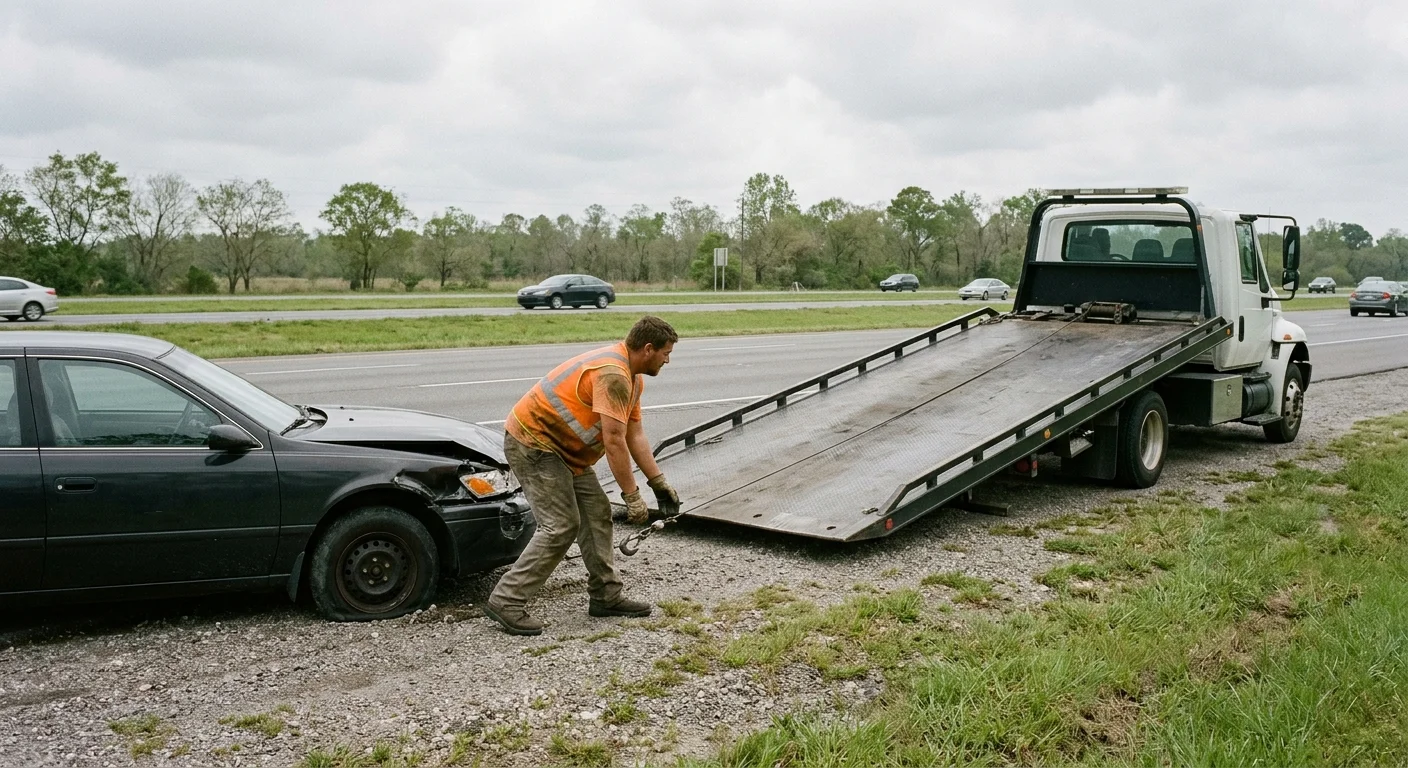
Destrehan is in St. Charles Parish, on Airline Highway and I-310. After a crash there, confirm the full destination address before the damaged car is loaded. The recovery method itself is covered in accident recovery or a standard tow. This page is the Destrehan, I-310, and Airline intake.
Quick Tow New Orleans matches callers with licensed, independent local operators. The matched operator handles the towing and collects payment directly.
What to do before arranging the tow
Start by confirming whether law enforcement is managing the scene. Tell the referral line if an officer has already arranged a tow. Also say whether the vehicle has been released for movement.
That distinction matters in Louisiana. The Louisiana Public Service Commission treats a tow as nonconsensual when a police officer arranges it. That remains true even when the vehicle’s owner asked the officer for help. The LPSC nonconsensual towing schedule governs those jobs.
A tow you knowingly arrange directly with an operator is different. Tell the matched operator which situation applies before authorizing anything.
Next, identify the pickup point as closely as possible. “Destrehan” alone leaves too much room for error. Note whether the car is on I-310, Airline Highway, an exit ramp, or nearby private property. Share the direction of travel, closest intersection, exit information, or a dropped map pin.
For an emergency, contact 911. Louisiana’s Motorist Assistance Patrol isn’t a tow service that drivers call to request a truck. It follows fixed patrol routes and may provide limited roadside help when already present. Drivers can check current incidents, closures, and traffic conditions through 511 Louisiana.
If you need a referral after the scene is ready, the emergency towing service explains how the matching process works.
Information the matched operator will need
A clear condition report helps the operator decide what equipment the job requires. Start with the vehicle’s year, make, model, and general size. Mention if it’s an electric vehicle, motorcycle, pickup, van, or commercial vehicle.
Describe the damage without diagnosing it. Useful details include whether the wheels can roll, whether the steering responds, and whether any tire sits at an unusual angle. Mention deployed airbags, damaged glass, loose body panels, or visible fluid. Also tell the operator if the car left the pavement or struck a barrier.
The operator will also need access details. Say where the keys are and whether someone will remain with the vehicle. Mention any locked gate, parking restriction, narrow entrance, or officer controlling access to the scene.
Have the destination ready when possible. Give the full street address, not only a shop name. If a repair facility is receiving the car, confirm that it accepts crash-damaged vehicles. Write down the contact person’s name and any entrance instructions they provide.
Tell the operator if the destination hasn’t been decided. Ask where the vehicle would be stored and how you could retrieve it. Storage terms belong to the independent operator, so confirm them directly before authorizing the trip.
Cars that can’t be reached or loaded normally may need accident recovery and winch-out service. Sharing accurate damage and position details helps the operator assess that need.
How I-310 and Airline Highway affect the destination
Destrehan crash locations often get described by one of two route names: I-310 or Airline Highway. That describes the pickup area, but it doesn’t settle where the car should go. The destination may be a shop, storage yard, or home across a parish line.
A familiar repair shop isn’t always the practical choice. First confirm that the shop accepts the vehicle’s damage type. Then provide its exact address and receiving instructions. A business name can point to the wrong branch or entrance.
A home address can work only when the property can receive the disabled vehicle. Tell the operator about driveway width, gates, parked vehicles, and any tight turns. The operator decides whether the requested drop location can be reached with the assigned equipment.
Storage may be the fallback when no receiver is confirmed. Before the vehicle moves, ask for the facility’s name, physical address, access process, and payment terms. Don’t assume a Destrehan pickup means the car will remain in Destrehan.
Distance also changes when the destination crosses parish lines. A shop near the crash may involve a different trip than one elsewhere in the New Orleans metro. Ask the operator how the chosen address affects the service terms before approving it.
Check current road conditions when choosing between destinations. An incident or closure on I-310 or Airline Highway may affect the route the operator can use. It doesn’t change the need for a precise, confirmed delivery address.
Choosing between recovery and a standard tow
A standard tow generally covers a vehicle that can be reached and loaded with ordinary towing equipment. Accident recovery involves extra work when the vehicle’s position or damage complicates loading. The operator makes that assessment after reviewing the scene.
A sedan resting on the roadway or a clear shoulder may need a standard flatbed or wheel-lift tow. A car off the pavement, lodged against an object, or sitting on damaged suspension may need recovery work. Locked wheels and broken steering can also change the loading plan.
Don’t try to select the truck or recovery method yourself. Describe what happened and what you can observe. The licensed operator decides which equipment fits the vehicle and its position.
Be specific about all sides of the car. Damage that looks minor from the driver’s side may hide a wheel that won’t turn. If you already have photographs, tell the operator what they show. Photos of the vehicle’s position and wheel condition can provide useful context.
Louisiana’s nonconsensual towing rules distinguish towing from recovery work. They also require covered invoices to separate applicable charges. That doesn’t establish the final cost of a customer-arranged tow. Directly arranged service terms come from the independent operator.
Confirm whether the requested service covers only loading and transport. If debris, an off-road position, or damaged running gear is involved, ask the operator whether the job is being treated as recovery. That answer should be clear before work begins.
What to confirm before the vehicle leaves
Start with the written destination. Confirm the street address, receiving business, and contact person. If the first destination can’t accept the car, agree on the fallback before loading begins.
Get the independent operator’s business name and contact information. Confirm how payment works and who must authorize any destination change. Quick Tow New Orleans doesn’t set the operator’s prices or collect the towing payment.
Ask whether the job is a direct, consented tow or a police-arranged nonconsensual tow. Louisiana applies different pricing rules to those categories. For a covered nonconsensual tow, the operator must provide an itemized invoice at release or upon request. You don’t have to pay first to receive a copy.
That invoice must separate applicable towing, recovery, storage, fuel surcharge, and additional charges. It must also show the dispatch and unhook times. Tow companies must accept credit cards for nonconsensual jobs, with any processing fee listed separately.
Keep the crash report information, operator details, destination, and vehicle photographs together. If an insurer is involved, ask what documents the policy requires. Louisiana requires liability coverage, but it doesn’t mandate towing or roadside coverage. Whether the tow is covered depends on the optional terms in your policy.
Our guide to insurance coverage for towing in Louisiana explains that distinction. Don’t assume opening a claim means every towing or storage charge will be paid.
Finally, ask how belongings and keys will be handled. Confirm what stays inside the car and who will receive the keys. A few clear notes can prevent disputes about the vehicle’s destination and condition.
When to call us
Call when crash damage requires a licensed towing operator and the vehicle is ready to be moved. The line takes calls 24/7 for referrals throughout the New Orleans metro. Call (504) 474-5530. We match you with a licensed local operator who quotes before the truck rolls.