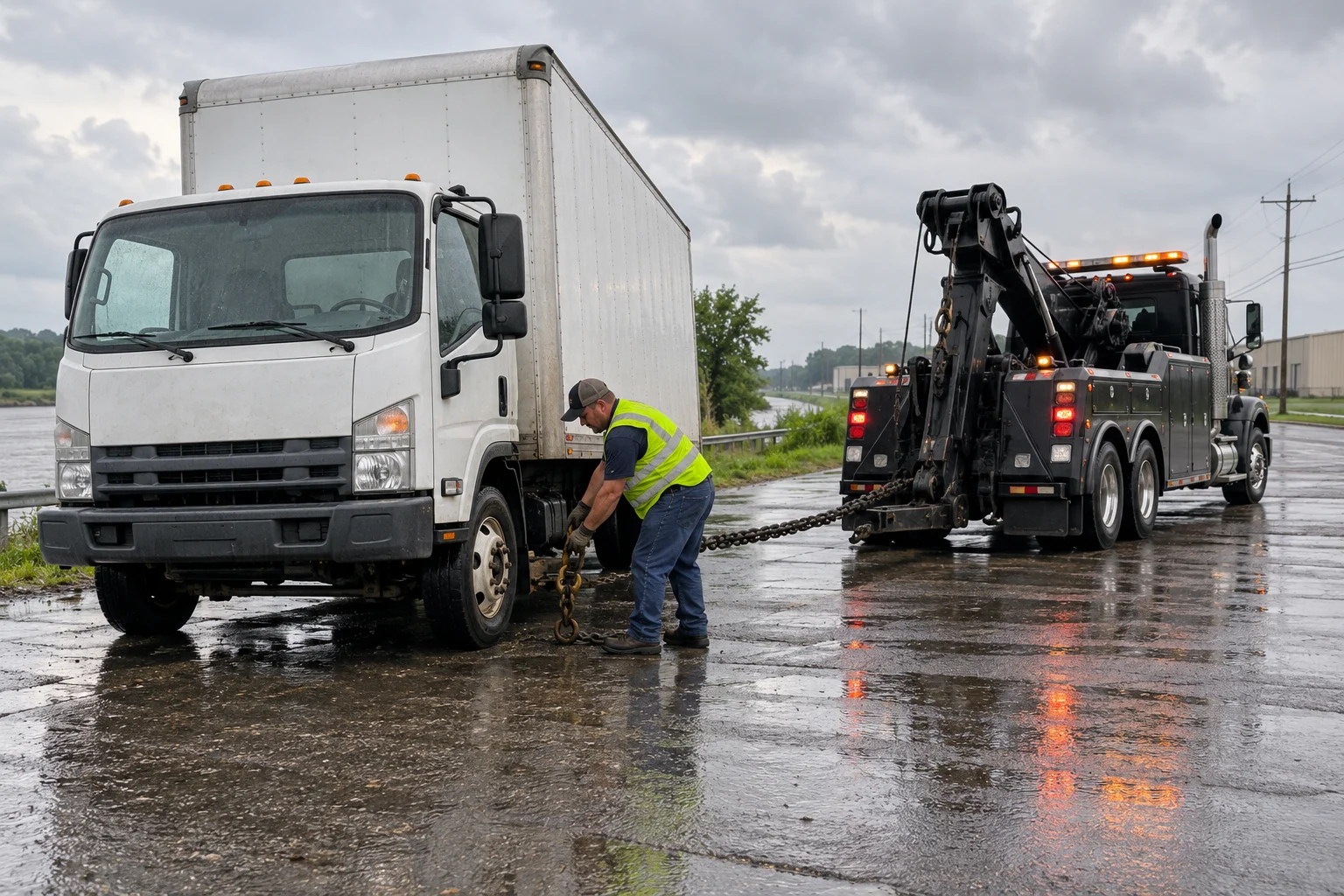
A box truck breakdown in Norco needs a carefully matched towing operator. Before requesting box truck towing in Norco, LA, report the location, vehicle specifications, damage, cargo, and intended destination. Those details help distinguish a routine commercial tow from a recovery job.
Start with the truck’s location and condition
Begin with where the box truck stopped. “Norco” alone doesn’t give an operator enough information. Say whether you’re on Airline Highway, River Road, private property, or a connecting street.
Use the nearest address when one is visible. Otherwise, share a dropped map pin. Add your direction of travel and the nearest intersection or recognizable business. If the truck is inside a gated property, explain which entrance provides access.
Describe the truck’s position next. A vehicle sitting squarely in a broad paved lot presents a different request from one leaning onto a soft shoulder. Mention whether all wheels remain on pavement. Report any ditch, curb, mud, fence, loading dock, or low overhead structure nearby.
Then describe what happened. Useful details include:
- The engine stopped while driving
- The truck won’t start after parking
- A tire or wheel is damaged
- The transmission won’t select neutral
- The steering appears locked or damaged
- The truck left the pavement
- A collision damaged the cab or cargo body
- Fluids are visible beneath the vehicle
Don’t crawl beneath the truck to investigate. Report only what you can observe safely. If traffic or another immediate hazard is present, move yourself away from danger and contact emergency authorities when appropriate.
Quick Tow New Orleans is a referral service. We match callers with independent, licensed local operators. The line takes calls around the clock, but no arrival or response time should be assumed.
Airline Highway and river roads need clear landmarks
Norco sits within the River Parishes, where a short location description can still cover several possible approaches. Airline Highway, River Road, Destrehan, and LaPlace are distinct reference points. Give the operator enough detail to identify the correct side of the area.
On Airline Highway, report your travel direction and nearest intersection. A map pin is especially helpful when street numbering isn’t visible from the truck. If you’ve turned onto a side road, don’t keep naming Airline Highway as the current location. State the road where the vehicle actually sits.
River Road needs the same precision. Specify your nearest confirmed landmark without guessing a facility name. Don’t identify an industrial property by appearance alone. Use a posted address, gate number, or name from your operating documents.
Access conditions matter too. Tell the operator about a narrow gate, parked trailers, low branches, loading areas, or limited turning space. If the property controls entry, contact the site representative and confirm where towing equipment may enter. Don’t promise that an operator can use a particular gate before the site approves it.
Drivers can check 511 Louisiana for current incidents and closures before choosing a route or destination. Traffic information may also help explain why one approach is unavailable.
A breakdown closer to Destrehan may resemble situations covered in our guide to accident towing in Destrehan. For a broader checklist focused on city routes, see our New Orleans box truck breakdown guide.
Use the vehicle data plate for specifications
Don’t estimate a box truck’s weight from its appearance. Two trucks with similar cargo bodies can have different ratings. Read the vehicle data plate and operating documents instead.
The plate is commonly found around the driver’s door area. Photograph it if you can do so safely. The registration, rental agreement, fleet record, or insurance document may provide other identifying details.
Report the information exactly as printed. Useful details may include:
- Year, make, and model
- Vehicle identification number
- Gross vehicle weight rating
- Unit or fleet number
- Box length, if documented
- Overall height, if documented
- Number of axles
- Whether a trailer is attached
- Whether the truck is loaded or empty
Don’t substitute the truck’s current estimated weight for its stated rating. If you don’t know the loaded weight, say that it isn’t confirmed. The operator can then decide what other information is needed before accepting the request.
Also report any modifications. A liftgate, refrigeration unit, utility body, or other installed equipment can affect the truck’s shape and clearance. Describe the feature without guessing its weight.
Louisiana’s regulated non-consensual towing schedule separates vehicles by weight class, but those regulated maximums aren’t Quick Tow prices. A customer-requested commercial tow also shouldn’t be quoted from a state non-consensual schedule. The matched operator sets the terms for the requested service.
These specifications help us seek the right independent operator through our heavy-duty towing referral service. They don’t guarantee that a particular truck or method will be suitable. The operator makes that decision after reviewing the vehicle and site details.
Cargo and wheel damage can change the request
Cargo condition belongs in the first report. State whether the box is empty, partly loaded, or loaded. If the shipment shifted, spilled, or pressed against a door, say so before anyone attempts movement.
Describe the cargo in plain terms. Don’t invent a weight, material classification, or handling rule. Use the shipping papers, bill of lading, rental documents, or fleet record. If a document identifies special handling requirements, relay its wording to the operator.
Never open a strained cargo door just to inspect the load. A shifted shipment may press against it. Keep people away from a damaged cargo body, leaking material, broken glass, or unstable freight. Emergency authorities should handle an active public hazard.
Wheel and suspension damage also need clear reporting. Photograph each visibly affected corner from a safe position. Mention if a wheel points in an unusual direction, a tire has separated, or the body rests lower on one side. Don’t claim a broken axle unless that damage has been confirmed.
A truck that simply won’t start is not the same request as one resting off pavement. A collision, rollover risk, lodged vehicle, or spilled load may require accident recovery and winch-out coordination instead of a standard tow. The operator decides what equipment and procedures fit the scene.
Keep the report factual:
- What you can see
- What the driver experienced
- What documents confirm
- What remains unknown
- Whether police, fire personnel, or property management are present
Clear limits are useful. “Cargo weight not confirmed” is better than a guess. “Front passenger wheel visibly displaced” is better than diagnosing unseen suspension damage.
Choose a River Parishes destination before movement
A towing request works better when the destination is already chosen. For a Norco breakdown, that destination might be in Norco, Destrehan, LaPlace, or elsewhere in the River Parishes. The correct choice depends on the truck owner, fleet manager, rental company, insurer, and repair plan.
Call the proposed destination before arranging movement. Confirm that it accepts the truck’s size and type. Ask where disabled commercial vehicles should enter. A passenger-car entrance may not be the correct access point for a box truck.
If the truck belongs to a fleet, contact the fleet manager first. Rental vehicles may have reporting instructions in the agreement. An owner-operator should confirm that the chosen shop can address the suspected problem. Don’t assume every repair facility accepts commercial trucks, damaged cargo bodies, or after-hours drop-offs.
Give the matched operator the full destination address. Include the business name and approved entrance when confirmed. If the destination hasn’t been decided, say so during the call. Don’t direct movement to a random lot or roadside location simply to clear the current scene.
The final route can also depend on the truck’s condition and confirmed access. A damaged wheel, low clearance, shifted cargo, or closed gate may affect the plan. The independent operator reviews those details and decides whether to accept the job.
Before movement, gather the keys, operating documents, destination approval, and contact information for the person authorized to make decisions. Keep personal items and delivery paperwork secure. Don’t remove cargo unless the responsible business or responding authorities direct that process.
When to call us
Call when a disabled Norco box truck needs a licensed towing professional and you can report its location, specifications, condition, cargo status, and destination. Call us at (504) 474-5530 and we’ll connect you with a licensed local operator.