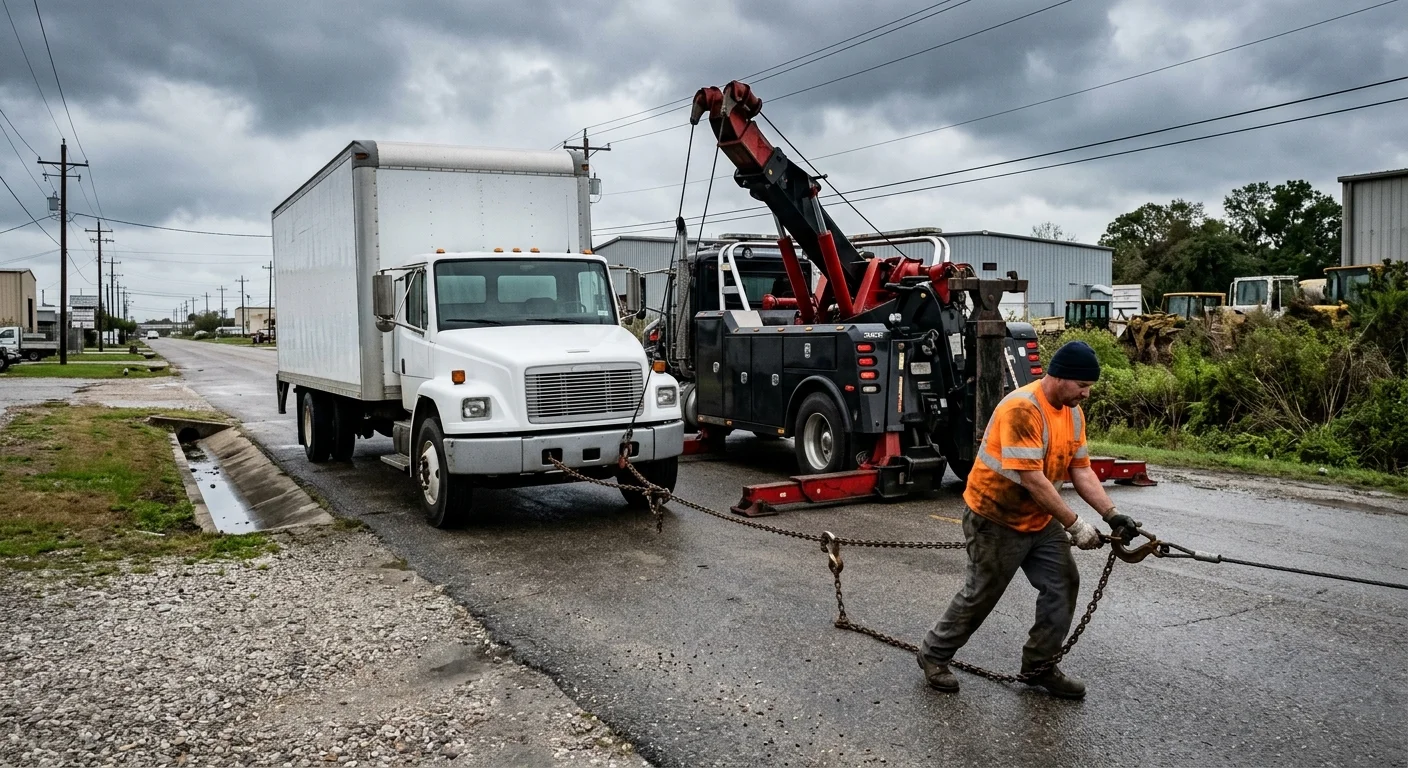
A disabled box truck is a weight-and-cargo job, not a sedan tow. Before you call (504) 474-5530, have these four facts:
- GVWR from the data plate, not a guess from box length.
- Loaded or empty.
- Destination dock height and whether that dock can receive the truck after hours.
- Whether cargo stays aboard or must be transferred.
Location, whether it rolls, and live-lane hazards still matter. Our published $95 figure is a light-duty auto hookup only. It is not a box-truck total. Ask the operator for a written quote. See heavy-duty towing.
Give the matched operator those details before equipment is sent.
Start with the truck’s location and condition
Describe exactly where the truck stopped. A route name alone usually isn’t enough. Include the direction of travel, nearest exit, cross street or business entrance. Say whether the truck is on a shoulder, ramp, loading dock, parking lot or active lane.
On I-610, note whether you’re near the I-10 connection or an interchange. On US-90B, identify the downtown or West Bank side. A location pin can help, but pair it with visible landmarks. Pins sometimes land on the wrong roadway or beneath an elevated section.
If the truck creates an immediate traffic hazard, call 911. Don’t step into moving traffic to inspect damage or take photographs. Follow your employer’s roadside safety procedure and move to a safer position when possible.
Drivers can check current closures and incidents through Louisiana 511. That information can also show whether access to the truck has changed since the first call.
Next, report what the truck can still do. Tell the operator whether it starts, rolls, steers and holds its position. Mention warning lights, fluid on the pavement, smoke, collision damage or contact between the body and road. Don’t crawl beneath the truck to investigate.
Say which wheels appear damaged. Include missing tires, bent wheels and anything hanging near an axle. If the truck entered mud, soft ground or floodwater, stop trying to drive it out. That situation may require accident recovery or a controlled winch-out, not a basic tow.
Weight and body type change the equipment
A box truck’s appearance doesn’t establish its towing class. Two trucks with similar cargo bodies can have different ratings and chassis. Don’t guess from the box length, number of rear tires or size of the cab.
Find the vehicle data plate and photograph it clearly. The gross vehicle weight rating, often shown as GVWR, is more useful than a driver’s visual estimate. Registration and fleet records may carry supporting specifications. Keep those materials available for the matched operator.
Louisiana’s current LPSC schedule divides vehicles into three classes for non-consensual towing. Light Duty covers 10,000 pounds or less. Medium Duty covers 10,001 through 26,000 pounds. Heavy Duty begins at 26,001 pounds.
Those classifications belong to the state schedule. They aren’t Quick Tow prices, and they don’t determine the total for a driver-requested tow. They do show why “box truck” isn’t a complete equipment description.
Tell the operator whether the truck is a cutaway van, cab-over truck or conventional straight truck. Report a lift gate, refrigeration unit, underbody storage, rear step or attached trailer. Share the number of axles and whether the rear wheels are single or dual.
The operator will decide what towing setup fits the truck and scene. Our heavy-duty towing referral service connects callers with independent, licensed local operators. The operator, not Quick Tow, assesses the specifications and performs the work.
Cargo and wheel damage change the recovery
A disabled empty truck isn’t the same job as a loaded one. Tell the operator whether cargo is aboard before the truck is moved. Use a manifest, shipping record or fleet record for weight details. If no reliable figure is available, say that the cargo weight couldn’t be confirmed.
Describe the cargo without opening damaged doors or entering an unstable body. Say whether it consists of boxed goods, furniture, food, equipment or loose material. Report anything that has shifted, spilled or pressed against a door. Leaking, smoking or unidentified material needs to be disclosed immediately.
A lift gate also matters. Tell the operator whether it’s folded, lowered, damaged or touching the pavement. Photograph its position from a safe place. Don’t operate damaged equipment just to make the truck look ready for towing.
Wheel and axle condition can change the work at the scene. Identify whether damage is at the steering axle or rear axle. Report flat tires, separated tread, wheels sitting at an angle and body panels resting against tires. If you can’t see the problem safely, don’t guess.
After a crash, include damage to the cab, cargo body, bumper and lower side rails. Tell the operator whether another vehicle, barrier or roadside object is involved. Police instructions and scene access may affect what happens next.
Cargo ownership can also shape the destination. A fleet manager, shipper or insurer may need to approve unloading or transfer. Confirm that before arranging separate cargo movement. The towing operator can explain what work they can perform, but shouldn’t be expected to decide who owns or controls the load.
Why I-610 and US-90B affect the destination
Choose a workable destination before the truck is connected. Confirm that the repair facility accepts the truck’s chassis, body size and type of damage. A passenger-car shop may not handle a commercial chassis or damaged cargo body.
I-610 runs through a different part of the metro than US-90B. A disabled truck on I-610 may be positioned for a destination in Orleans or Jefferson Parish. US-90B can place the truck near downtown approaches, the Crescent City Connection or West Bank routes.
That geography affects route planning. A destination across the Mississippi River adds a bridge crossing. A North Shore destination adds a Lake Pontchartrain crossing. Those choices can matter more than the repair shop’s street address.
Industrial areas also need precise directions. A truck near Tchoupitoulas Street, Almonaster Avenue or an Elmwood warehouse may be inside a gated yard or loading area. Give the gate, dock or entrance location. Tell the operator about locked access, posted restrictions and any site contact who must open the property.
Don’t assume the nearest shop is the right shop. Call the proposed destination and confirm it can receive the truck. Ask where the operator should place it and who will accept the keys.
The DOTD Motorist Assistance Patrol provides limited free help on scheduled routes. It isn’t a call-out towing service and doesn’t take vehicles away for repair. For more highway-specific guidance, see what to do when you’ve broken down on I-10 or the Causeway.
What the matched operator needs before the job
Prepare the details in one message or call. Clear information helps the independent operator decide whether the truck fits their equipment and whether the scene needs added planning.
Have these items ready:
- The route, direction, nearest exit and exact stopping position
- A location pin supported by a landmark or cross street
- A clear photograph of the vehicle data plate
- The year, make, model and available ownership materials
- The body style, axle count and single or dual rear wheels
- The truck’s loaded or empty status
- Cargo details taken from reliable shipping or fleet records
- The condition of the tires, wheels, steering and brakes
- Any collision damage, leaking material or shifted cargo
- Lift gate, refrigeration unit or trailer information
- Photographs taken without entering traffic or crawling underneath
- A confirmed destination and receiving contact
Tell the operator if police arranged the tow. Under the LPSC order, even a tow the driver asks an officer to arrange counts as non-consensual. That distinction affects which state rules and rate limits apply.
Ask the matched operator how charges will be calculated before agreeing to the job. Quick Tow doesn’t set operator prices or collect payment for them. You contract with and pay the independent operator directly.
An operator may decline if the truck, cargo, damage or location falls outside the equipment available for that job. That doesn’t mean every towing company will make the same decision. Our guide to why a Louisiana towing operator may say no explains what information can help with the next call.
When to call us
Call when a box truck can’t safely continue, has damaged wheels or needs commercial towing equipment. The line takes calls 24/7, and we match you with an independent, licensed local operator. Call (504) 474-5530. We match you with a licensed local operator who quotes before the truck rolls.