Start with Find My Towed Vehicle. Bring ID. Ask about the City hearing path if a public agency ordered the tow. We do not publish City storage or boot dollars. Private-lot daily storage uses the LPSC schedule on daily impound storage charges. Payments go to 400 N. Claiborne Ave. Vehicles held over 24 hours may move to 10200 Almonaster Ave. Confirm pickup with the City.
Start by identifying who ordered the tow
City yard towing describes custody, not the truck that moved your car. A private towing company may move a vehicle under a public agency’s direction. What matters is who authorized the removal and now controls its release.
Start with the place where the vehicle was parked. A citation from City parking staff or law enforcement points toward a public tow. A notice from an apartment complex, hospital, school, shopping center, or other parking area may indicate a private-property tow.
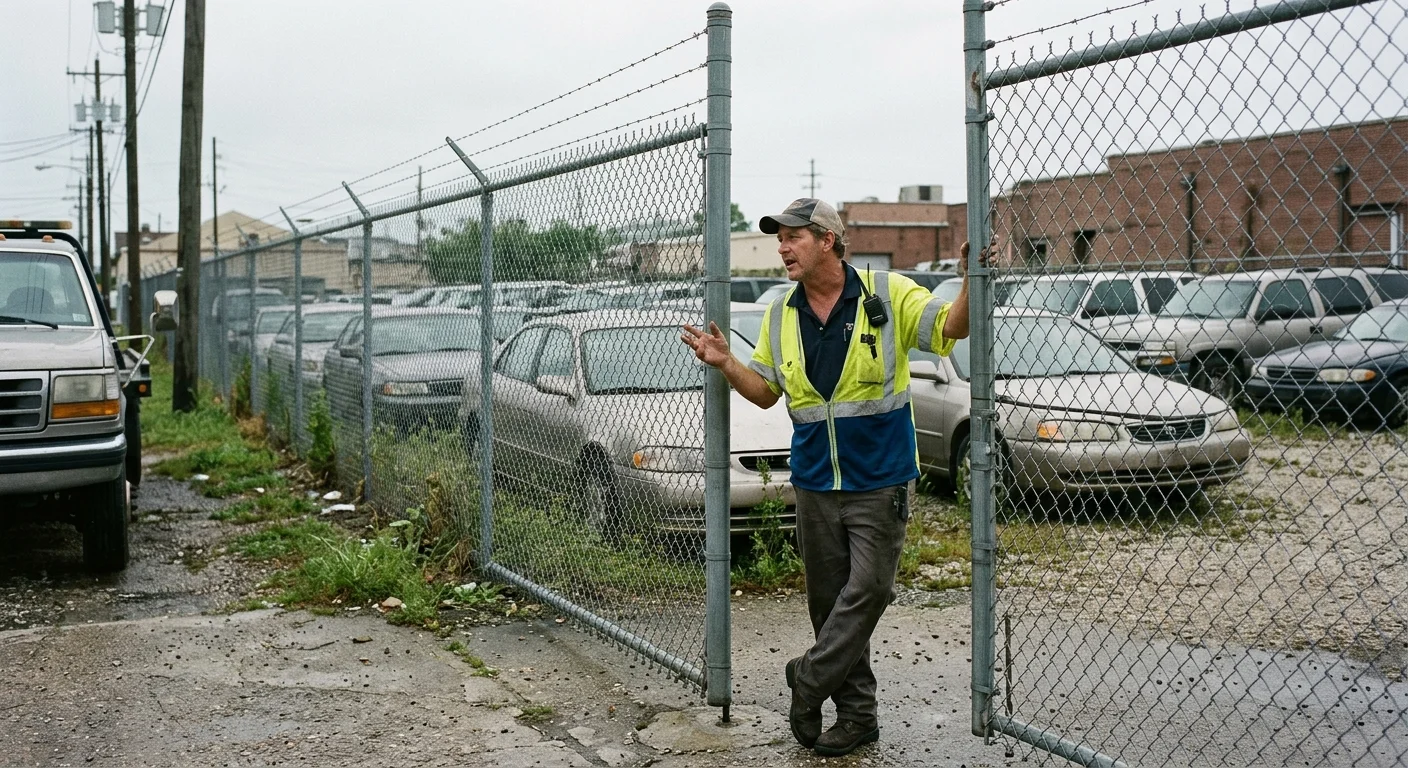
Check every document left behind or handed to you. Look for the agency, property owner, towing company, storage facility, and removal location. Don’t assume a fenced yard belongs to the City because it resembles a municipal facility.
Louisiana law also separates the property representative from the towing operator. For covered private parking areas, the authorized property representative can’t be the tow truck owner or operator. That distinction matters when you’re trying to learn who requested the removal.
Posted entrance and exit signs provide another clue. Under the state’s private-property towing rules, signs used with a towing contract must identify the towing company. They must include its address and phone number in lettering at least two inches high.
Our guide to private property towing explains that service from the property owner’s side. If your vehicle was removed without your consent, focus first on authorization, custody, and documentation.
A city tow and a private tow follow different paths
A City tow in Orleans Parish enters the Department of Public Works Parking Division system. The City runs two facilities and controls its own payment and release process. A private referral service can’t authorize that release or alter the City’s bill.
Public custody can also create a specific hearing right. Under R.S. 32:1727, an owner whose vehicle is stored by a public agency may request an administrative hearing. The hearing determines whether the tow and storage were proper.
That request must reach the agency that ordered the tow within ten days after the required notice was mailed. The agency must hold the hearing within three business days after receiving the request. The statute doesn’t promise damages, waived charges, or automatic release.
Private-property towing follows another route. Louisiana law requires law enforcement authorization or proper tagging before a nonconsensual tow from a covered parking area. A tag isn’t required when the property owner signs the billing invoice before removal or compliant signs cover the property.
The towing operator must also provide an itemized invoice. Private nonconsensual charges are governed by Louisiana Public Service Commission rules, not the City’s impound schedule. Even a tow the driver asks an officer to arrange counts as nonconsensual under the LPSC order.
Read New Orleans towing rights before disputing the tow. The separate guide to Louisiana private-property towing law explains signs, tags, invoices, and authorization in more detail.
Find the vehicle before discussing payment
Confirming custody comes before arguing about money. A City representative can’t explain a private facility’s balance. A private yard can’t release a vehicle held through the City’s system.
Use the City’s official Find My Towed Vehicle page when the tow occurred in Orleans Parish under City authority. The page provides the City’s current vehicle-location contact route.
The City directs impound payments to 400 N. Claiborne Ave, even when a vehicle is stored at 10200 Almonaster Ave. Vehicles held longer than 24 hours may be moved to Almonaster. Confirm the pickup location with the City before traveling. See the City’s July 2026 retrieval instructions.
For a private-property tow, revisit the parking location if it’s safe. Read the entrance, exit, and space-specific signs. Record the company and facility information exactly as displayed. Louisiana requires a private storage operator to notify the sheriff or municipal police within 24 hours after a nonconsensual private-property tow. Law enforcement must keep that information reasonably available for public requests.
Location also changes the authority involved. Metairie isn’t inside the City of New Orleans. Slidell sits across Lake Pontchartrain, and Westbank addresses can fall under different local jurisdictions. Don’t assume the Claiborne process applies because the trip began somewhere in the metro.
For the broader search process, use our New Orleans towed-vehicle location guide. It covers the lookup steps without confusing City custody with private storage.
Check current release details with the facility
Once you identify the facility, confirm its current release instructions directly. Ask what documents it requires, where payment occurs, and whether another agency placed a hold. Don’t travel based only on an old search result or social post.
The City lists the Claiborne release window as 7:30 a.m. to 10:00 p.m. daily. Its Cashiering Office at that address has separate posted hours of 8:00 a.m. to 6:00 p.m., Monday through Friday. Those schedules serve different functions, so they aren’t necessarily contradictory. Confirm today’s hours with the City before leaving.
The City also requires outstanding parking citations at least 90 days old to be paid before release. That requirement belongs to the City’s impound process. It doesn’t describe a customer-requested tow or a private yard’s independent balance.
A reliable current City storage rate and boot fee couldn’t be confirmed from consistent primary-source information. The Department of Public Works information reviewed for this guide conflicts on storage, and a current boot amount wasn’t consistently listed. Confirm both amounts directly with the Parking Division before paying.
For a nonconsensual tow, request the itemized invoice. It must separate the applicable towing, recovery, storage, fuel surcharge, and added charges. You don’t have to pay first merely to receive a copy. Credit cards must be accepted, with any processing fee shown separately.
Quick Tow New Orleans can’t release an impounded vehicle, remove a government hold, or reduce a facility’s bill. Those decisions remain with the agency or operator holding the vehicle.
Where to verify a charge or rule
Use the authority responsible for the type of tow. For a City-held vehicle, start with the Department of Public Works Parking Division and its current nola.gov instructions. Ask the City to explain the balance and identify each release requirement.
For Louisiana’s general towing framework, consult the Louisiana Towing and Storage Act. Public-agency hearing rights, storage notices, private-property authorization, and operator licensing come from different sections. Don’t blend them into one universal rule.
For a private or police-arranged nonconsensual tow, check the current LPSC rate schedule. The listed amounts are maximum regulated rates, not Quick Tow’s prices. They apply by vehicle class and may include minimum time, storage, surcharges, or documented recovery work.
The current schedule applies to tows performed on or after April 1, 2026. LPSC rates change through annual indexing each April, so older screenshots may be stale. Match the tow date to the schedule that was effective then.
An LPSC complaint doesn’t require paying the invoice first. If the Commission later finds the charges excessive, storage fees stop accruing as of the written complaint date. Keep the invoice, notice, photographs, and property signs available for review.
The core distinction remains simple. A public tow goes back to the ordering agency. A private nonconsensual tow goes back to the property authorization, operator records, and LPSC protections.
When to call us
Once a facility authorizes release, a damaged or nonrunning vehicle may still need a licensed towing pro. The line takes calls around the clock. Call (504) 474-5530. We match you with a licensed local operator who quotes before the truck rolls.