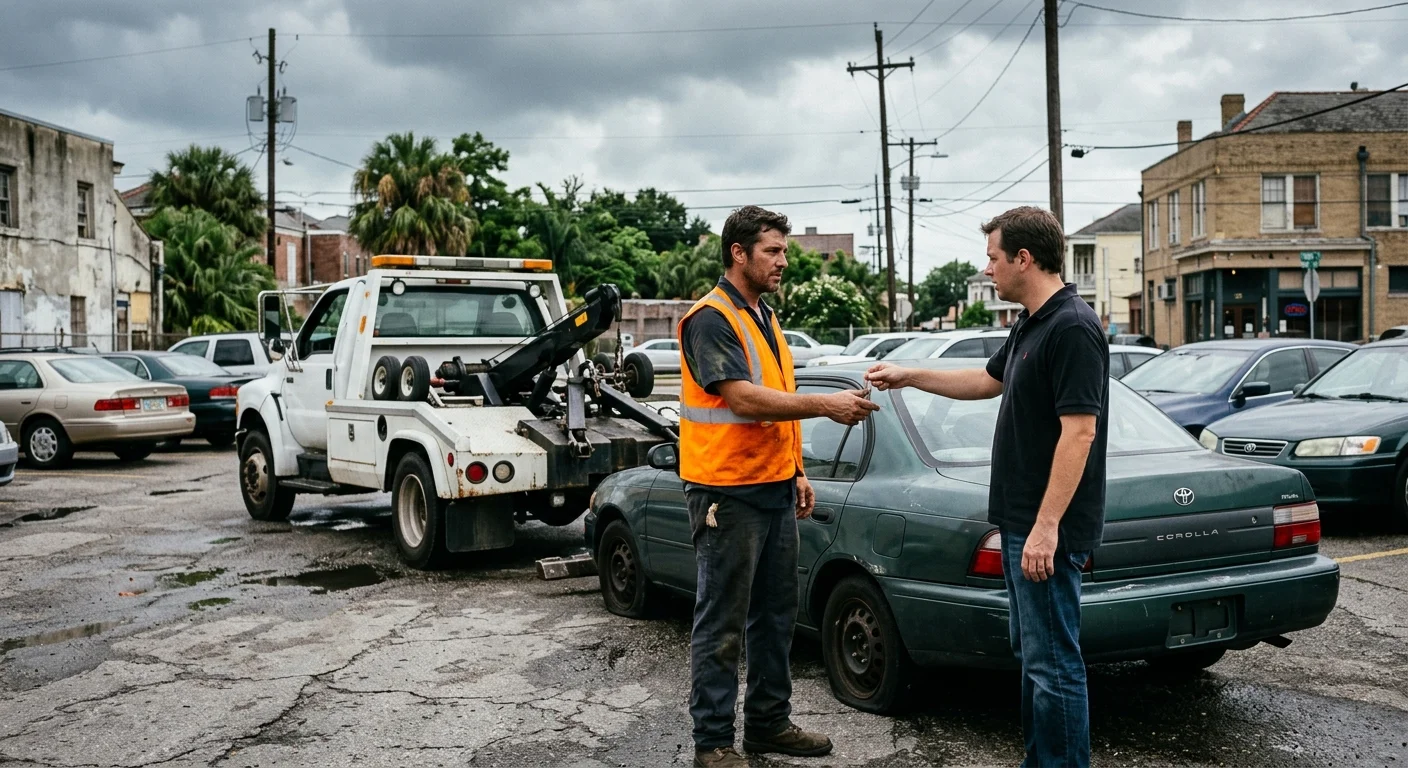
Stay if it is safe. Leave keys and authorization only with a named person. Never abandon a car in a live lane. Highway positioning is in broke down on I-10 or the Causeway. The operator’s policy still decides whether someone must remain after the quote.
Quick Tow New Orleans connects drivers with licensed, independent local operators. We don’t perform the tow or set an operator’s unattended-pickup policy.
The operator’s policy decides whether you can leave
There isn’t one answer that applies to every towing job. One operator may accept an unattended pickup after confirming access. Another may require you or an authorized person to remain with the vehicle.
The answer can also change with the location. A disabled car in your driveway is different from one inside an airport garage. A vehicle controlled by police or a property manager requires another kind of handoff.
If your real question is, “Can I leave before the tow truck arrives?” wait for direct approval from the matched operator. Don’t rely on an answer from a friend, garage attendant, or repair shop. Those people can’t set the operator’s policy.
Before leaving, confirm these details:
- Whether the operator accepts an unattended pickup
- How the operator will identify the correct vehicle
- Who will provide access and authorization
- Where the keys will be
- Whether the parking area has gates or restrictions
- Where the vehicle must be delivered
Get clear answers before walking away. Quick Tow can’t override the matched operator’s decision.
Location matters too. If the car is beside traffic on I-10 or US-90B, tell the operator if you need to move somewhere safer. Follow directions from any authority already managing the scene. On the Lake Pontchartrain Causeway, follow Causeway Police instructions instead of arranging your own unattended handoff.
Our emergency towing service can connect you with a licensed local operator. The line takes calls 24/7, including holidays.
Arrange vehicle access before going elsewhere
Keys are only one part of vehicle access. The operator also needs an accurate description of the car and its condition.
Tell the operator whether the doors are locked. Explain where every key or key card will be. Mention whether the car can shift into neutral and whether the parking brake releases. Report damaged wheels, blocked steering, low garage clearance, or anything parked close to the vehicle.
Don’t force a control that isn’t working. Give the operator the information and let that operator plan the pickup.
Ask how the key should be transferred. Depending on the operator’s policy, the approved handoff might involve you, another authorized person, or a secure method agreed upon directly. Don’t hide a key near the car without explicit instructions. A casual text such as “it’s under the mat” isn’t a complete handoff.
Take clear photos before leaving. Capture the vehicle, license plate, parking space, surrounding access, and visible condition. Send only what the matched operator requests. Photos help distinguish a gray sedan on a crowded level from every other gray sedan nearby.
Airport parking near MSY needs more detail than a street address. Share the lot or garage, level, row, and nearest marked entrance. Tell the operator about tickets, access cards, gates, or clearance signs.
Downtown garages need the same care. A Canal Street address may lead to several entrances. Some doors may serve pedestrians rather than vehicles. Give the operator the exact vehicle entrance and the space location. If an attendant controls access, confirm how the operator should check in before you leave.
Confirm who can approve the tow
The person making the call may not be the person who controls the vehicle. The matched operator may ask for proof that you can approve its removal. What qualifies depends on the operator and the circumstances.
Explain the ownership situation early. Say whether the car is yours, borrowed, rented, leased, or owned by an employer. If you’re calling for a family member, customer, tenant, or employee, tell the operator before leaving.
Ask what documentation the operator wants. That might include identification, registration, a rental agreement, written permission, or contact with the owner. Don’t assume one document works for every job.
A customer-requested tow also differs from a police-directed or property-controlled removal. Louisiana’s Towing and Storage Act governs towing businesses, but the practical handoff still depends on the type of tow. If police, airport staff, or a property manager controls the scene, ask that authority and the operator what must happen next.
This distinction matters in private garages around the Central Business District. Paying for parking doesn’t automatically answer who can grant access after you leave. The facility may need a vehicle description, space number, operator information, or direct confirmation from you.
Choose an operator based on the actual job, not a vague promise. Our guide to finding towing help in New Orleans explains what to confirm before committing.
Garages and private lots need a clear handoff
A garage pickup has two separate approvals. The operator must accept the job, and the property must allow access. Settle both before leaving.
Start with the parking facility. Ask which entrance a tow vehicle should use. Confirm whether an attendant will be present and what information that person needs. If a gate ticket, parking balance, or access card is involved, ask who handles it. Don’t leave those questions for the operator to discover at the entrance.
Airport parking near MSY can involve a large lot or multilevel garage. Downtown parking may place the car behind a rolling gate or on a tight ramp. In Metairie and Kenner, a disabled vehicle may sit inside an apartment, retail, or office lot with its own access procedure. Share each condition before the operator accepts the pickup.
The destination needs another handoff. A repair shop may have a preferred entrance, key box, or vehicle-drop procedure. Confirm those instructions with the shop. If nobody will receive the car, get clear written directions before towing begins. Don’t ask the operator to guess where the vehicle or keys belong.
Festival traffic, parades, construction, and crashes can also affect the planned route. Check Louisiana’s official traveler-information service for current incidents, events, and closures. Then give the operator any access detail that may not appear on a normal map.
Keep the location description specific. “Downtown garage” isn’t enough. A property name, vehicle entrance, level, row, space, and nearby marker create a usable handoff.
Ask where you and the vehicle will go
Your destination and the vehicle’s destination are two separate plans. Don’t assume the operator can carry passengers. Ask directly, then arrange another ride unless the matched operator explicitly confirms otherwise.
Give the exact delivery location before the tow begins. A repair shop name alone may not be enough. Confirm its street address, service entrance, receiving contact, and key instructions. If the destination changes, ask the operator before assuming the change is accepted.
Cross-parish trips need special clarity. A tow from Orleans Parish to Metairie or Kenner ends in Jefferson Parish. A trip to Gretna crosses toward the Westbank. Slidell or another North Shore destination can involve a much longer route across Lake Pontchartrain. Our long-distance towing service explains the information operators need for those trips.
Before separating from the car, ask the operator to confirm:
- The pickup location and access instructions
- The vehicle description and condition
- The final delivery address
- Who will receive the vehicle and keys
- Whether you need to remain available by phone
- The operator’s price and accepted payment method
- Whether passenger transportation is available
Pricing belongs to the independent operator, not Quick Tow New Orleans. Ask that operator what the job includes before approving it. Our guide to tow costs in New Orleans explains why customer-requested towing and regulated nonconsensual towing shouldn’t be treated as the same service.
Save the operator’s contact details and remain reachable. If access fails or the destination can’t accept the vehicle, the operator needs instructions from the authorized person.
When to call us
Call when a disabled vehicle needs a licensed towing professional and you need help arranging a clear handoff. Call (504) 474-5530. We match you with a licensed local operator who quotes before the truck rolls.