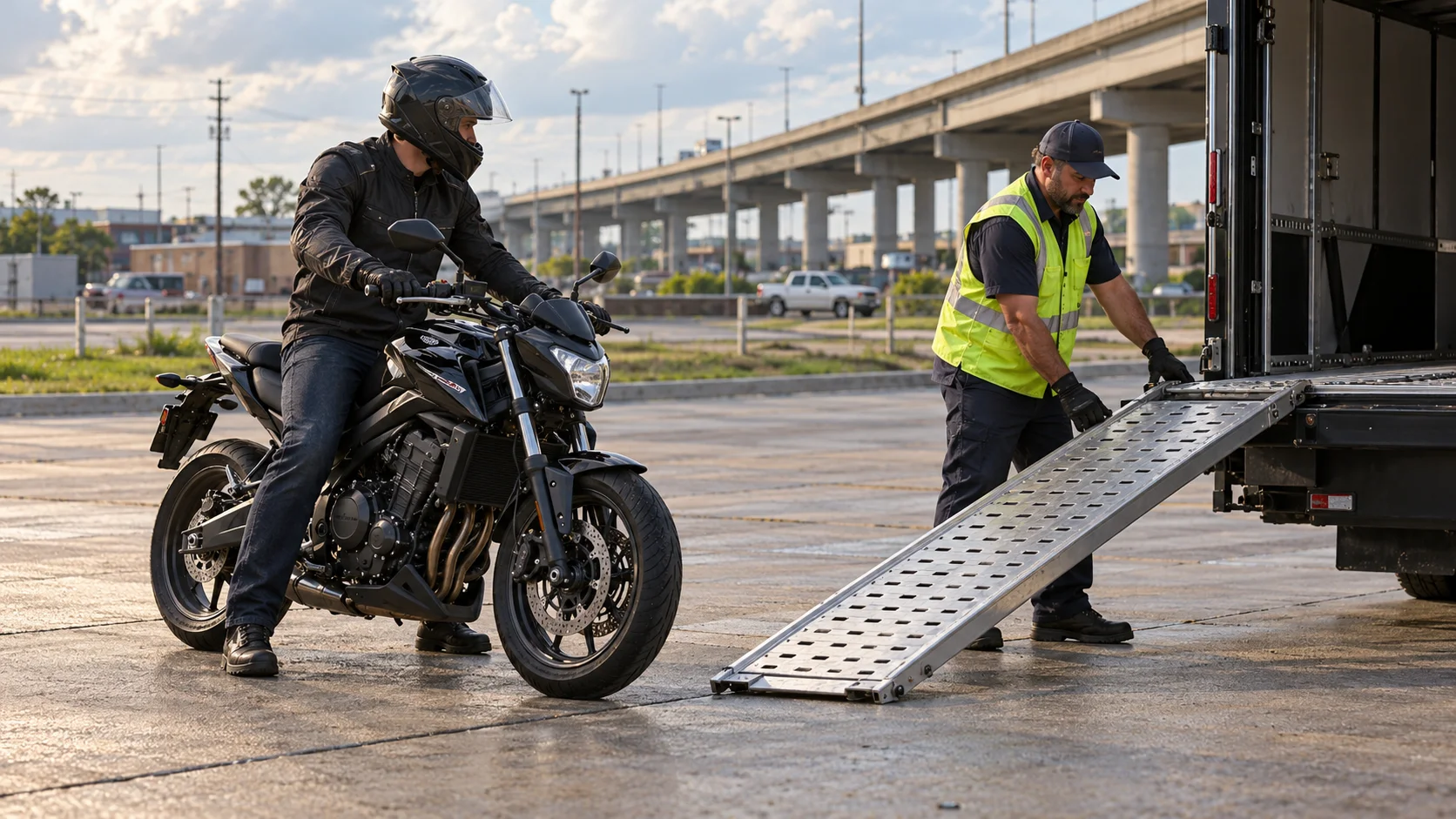
A disabled motorcycle in Westwego leaves you with one immediate choice: roadside help or transport. A minor problem may be handled where the bike sits. Damage, instability, or an uncertain mechanical failure usually points toward a tow.
Start with what the motorcycle is doing
Describe the symptom before deciding what service to request. “It won’t start” isn’t enough by itself. The operator needs to know what happened before the bike stopped and what it does now.
Note whether the engine turns over, the dash illuminates, or warning lights appear. Mention unusual sounds, leaking fluid, smoke, impact damage, or a wheel that won’t roll. If the bike stalled while moving, explain whether it restarted and stopped again.
Don’t attempt electrical testing, push-starting, lifting, or roadside repairs you aren’t trained to perform. Model-specific starting and warning-light guidance belongs in the owner’s materials. Those instructions account for the motorcycle’s electrical system, transmission, and safety features.
The bike’s physical condition matters just as much. Tell the operator if it’s standing upright, resting on its side, or leaning against something. Report visible damage around the wheels, forks, handlebars, frame, or controls. Don’t try to straighten or reposition damaged parts.
If you’re unsure what the symptoms mean, that’s normal. Take clear photos from a safe position. Capture the motorcycle, each side, the wheels, and any visible damage. Those images can help the matched operator understand the job without you diagnosing it.
Our guide to a motorcycle that won’t start explains this service choice in more detail. For a Westwego breakdown, the immediate goal is simpler: describe the bike accurately and avoid making the problem worse.
Westbank Expressway needs an exact location
“Westbank Expressway in Westwego” can still leave too much uncertainty. Give the operator a map pin, nearby cross street, business entrance, or recognizable property. State which direction you were traveling before stopping.
Westwego sits along a corridor that continues toward Marrero and Avondale. A caller may use any of those place names when describing the same general part of the West Bank. Your phone’s map pin gives the operator a clearer starting point than a neighborhood name alone.
Also distinguish the Westbank Expressway from Louisiana Highway 18. If you left one road for the other, explain where that happened. Don’t rely only on a storefront name, since businesses may have several entrances or share a large parking area.
Tell the operator where the motorcycle is physically parked:
- On a travel shoulder
- In a parking lot
- Beside a building
- Near an intersection
- Behind a gate or inside a garage
- In a narrow access lane
Access can change the equipment decision. Mention low clearances, locked gates, soft ground, tight turns, or barriers near the bike. Don’t move the motorcycle into traffic to make it easier to find.
You can check 511 Louisiana for current incidents, closures, and traffic conditions before choosing a meeting point. DOTD’s Motorist Assistance Patrol follows fixed routes and schedules. It isn’t a call-out towing service, and its published US-90B daytime coverage ends at Westwood.
When roadside help may fit
Roadside assistance may fit when the motorcycle appears undamaged and the problem is limited. Examples include a depleted battery, an empty fuel tank, or another basic issue that doesn’t require transport.
That doesn’t mean every no-start problem can be fixed beside the road. Similar symptoms can come from different causes. A motorcycle with power at the dash may still have a mechanical, electrical, fuel, or security-system problem. Let the matched operator decide what service can reasonably be attempted.
Before requesting roadside help, confirm these points:
- The motorcycle is upright and stable.
- There’s no visible crash damage.
- Neither wheel appears damaged or locked.
- No fluid is leaking.
- The bike is in a workable location.
- You have the key or required starting device.
Tell the operator the motorcycle’s year, make, model, and approximate condition. Mention accessories that affect access, including saddlebags, a windshield, or a large rear case. Don’t remove bodywork or disconnect components unless the owner’s materials specifically direct you.
Roadside help makes the most sense when there’s a clear, limited problem. If the attempted service doesn’t restore normal operation, transport may still be needed. Don’t keep riding after new warning lights, unusual noises, steering changes, or braking concerns appear.
If you’re choosing between services, say that during the call. Quick Tow New Orleans matches callers with independent, licensed local operators. The operator can review the symptoms and equipment needs before you decide how the motorcycle should leave the location.
When the bike may need transport
Request motorcycle towing when the motorcycle can’t be ridden safely or the problem can’t be identified roadside. Transport also makes sense after a collision, a fall, a damaged tire, a locked wheel, or visible steering damage.
A motorcycle that starts isn’t automatically ready to ride. Stop and request transport if it won’t track normally, hold fluid, steer freely, or respond as expected. Don’t test-ride a damaged bike through Westwego traffic to see whether the problem improves.
Weather and road conditions can strengthen the case for transport. Standing beside a motorcycle near moving traffic creates a different situation than waiting in a quiet parking lot. If the location feels exposed, move yourself away from traffic when you can do so safely. Leave the bike in place until trained help assesses it.
The destination matters too. Decide whether the motorcycle should go to a repair shop, dealership, home, or another approved location. Confirm that the destination accepts the bike and will be accessible when it arrives. Quick Tow New Orleans doesn’t own a storage yard or select the repair facility.
Specialized motorcycles need a clear description. Tell the operator about low ground clearance, a long wheelbase, custom bodywork, or existing damage. Don’t provide your own loading or tie-down instructions unless they come from the manufacturer. The licensed operator should choose the transport method after reviewing the motorcycle.
For a plain-language look at the process, read how motorcycle towing works. It explains what information helps before a disabled bike is moved.
What to confirm with the matched operator
A short, precise call reduces confusion. Start with your exact Westwego location and the motorcycle’s condition. Then confirm the operator understands that the job involves a motorcycle, not a passenger car.
Share these details before service:
- Year, make, and model
- Current map pin or exact address
- Road, direction, and nearest cross street
- Whether the bike rolls and steers
- Whether it’s upright or down
- Visible wheel, fork, frame, or control damage
- Leaks, smoke, unusual sounds, or warning lights
- Keys and security-system status
- Saddlebags, cases, windshields, or custom parts
- Clearance, gate, surface, or access concerns
- Requested destination
Ask what motorcycle-capable equipment the operator plans to use. Confirm how existing damage will be documented and whether photos would help. If the motorcycle has model-specific transport instructions, have the owner’s materials available for the operator to review.
Discuss charges directly with the independent operator before authorizing work. Quick Tow New Orleans doesn’t set operator prices, collect payment, or warrant the operator’s work. You contract with and pay the matched operator directly.
Don’t confuse customer-requested service with Louisiana’s regulated non-consensual towing schedule. Those are different situations. If a police officer or property owner arranged the tow, ask who authorized it and request an itemized invoice. The Louisiana Public Service Commission schedule governs maximum rates for non-consensual towing, not an ordinary tow you voluntarily request.
Keep your phone available after sharing the location. If you move to a safer waiting spot, tell the operator where you’ll be. Don’t leave the keys hidden on the motorcycle unless you’ve directly agreed on a secure handoff.
When to call us
Call when a Westwego motorcycle can’t be ridden safely, needs transport, or requires a licensed roadside professional. The line takes calls 24/7 and routes your request to an independent operator covering your zone. Call us at (504) 474-5530 and we’ll connect you with a licensed local operator.