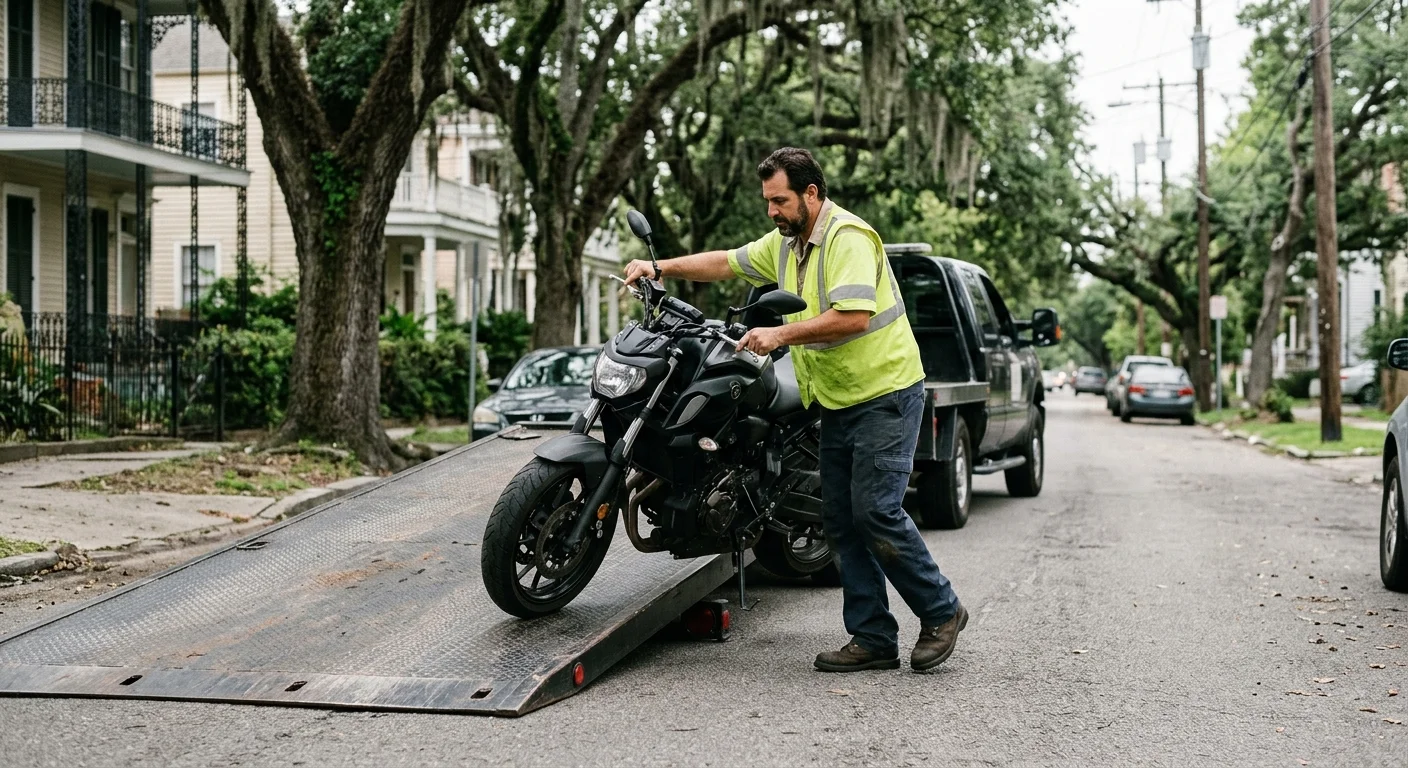
Sportbike and cruiser loading differ. A bike that will not go into neutral still needs straps and a deck, not a dragged wheel. See motorcycle towing, after a crash, and what changes motorcycle rates. We do not invent OEM tie-down points.
Why a motorcycle needs a different loading setup
A motorcycle can’t stand upright without support. It also has fewer suitable attachment points than most cars. Body panels, handlebars, cables, brake lines, and exhaust parts can be damaged by a poorly placed strap.
That changes the loading decision. The operator must consider the bike’s size, ground clearance, wheel condition, and visible damage. A standard street bike may load differently from a cruiser, scooter, touring motorcycle, or low custom build. Manufacturer guidance matters whenever the correct lifting or attachment points aren’t clear.
For many disabled bikes, a deck-style flatbed towing setup gives the operator a full transport surface. A motorcycle trailer or another bike-specific carrier may also work. The correct choice depends on the motorcycle and its condition. Quick Tow doesn’t own the carrier or choose equipment for the operator.
Location also affects the setup. A bike in a Mid-City driveway presents different access than one beside I-10, US-90B, or a narrow French Quarter block. A parking garage may add clearance limits. A soft shoulder may prevent the carrier from lining up directly with the bike.
Give the operator an exact pickup location before the job. Mention the road direction, nearby exit, garage level, gate, or blocked access. If the motorcycle is on the Lake Pontchartrain Causeway, follow Causeway Police guidance and wait for instructions before arranging any movement.
Our motorcycle towing service matches riders with licensed local operators. The matched operator decides which loading method fits the bike and pickup location.
What condition details matter before pickup
The operator needs more than the motorcycle’s make and model. Describe what happened and what no longer works. That information helps the operator decide how the bike can be moved onto the carrier.
Start with the wheels. Say whether both wheels turn freely. Report a flat tire, bent rim, seized brake, broken chain, loose belt, or damaged suspension. A motorcycle that rolls normally presents a different loading problem from one with a locked rear wheel.
Mention crash damage clearly. Tell the operator if the handlebars are bent, the forks look twisted, or fluids are leaking. Report loose fairings, a hanging exhaust, broken controls, or parts touching a tire. Don’t straighten, lift, or force damaged components before the operator examines them.
The key and steering condition also matter. Explain whether you have the key, whether the steering is locked, and whether the transmission will shift. Don’t force the ignition, handlebars, or shifter. Some motorcycles have model-specific transport instructions, especially bikes with unusual suspension, electric drivetrains, or aftermarket parts.
Send the exact year, make, and model when possible. Also mention saddlebags, a windshield, crash bars, a top case, or other accessories. Tell the operator about lowered suspension or custom bodywork.
Your location description should be equally precise. Note stairs, steep ramps, tight corners, low garage ceilings, mud, gravel, standing water, or traffic exposure. A photo of the bike and its surroundings can help the matched operator assess access before selecting equipment.
How the bike is supported during transport
The operator first positions the motorcycle on the carrier. Loading may involve a ramp, a powered deck, or equipment chosen for a bike that won’t roll. Riders should stay clear while the carrier is moving or the operator is tensioning equipment.
Once loaded, the motorcycle is kept upright with wheel supports and padded tie-down equipment. The operator chooses attachment points that can bear transport forces without contacting fragile pieces. Those points vary by motorcycle. A method suitable for one frame may damage another bike’s fairing, brake line, wiring, or handlebar controls.
There isn’t one universal strap count, angle, or suspension setting for every motorcycle. The operator should account for the carrier, bike design, and manufacturer instructions. If your owner’s manual includes a transport section, have it available. You can also show the operator documented attachment guidance from the motorcycle manufacturer.
Ask where the straps will contact the bike before transport begins. Look for contact with painted panels, cables, mirrors, turn signals, and exhaust components. If an accessory blocks a planned attachment point, tell the operator whether it’s original or aftermarket.
A damaged motorcycle needs extra care during this assessment. Bent forks, broken controls, leaking fluids, or a wheel that won’t turn can change how it’s loaded and supported. Don’t attempt to hold the bike upright beside moving equipment. Let the operator control the loading area.
Before departure, confirm that the destination can receive the motorcycle. A closed repair shop, locked gate, or inaccessible garage can create another unloading problem. Give the operator any entrance details that affect where the bike can be placed.
What to remove or secure beforehand
Remove loose personal items when you can do so without entering traffic or disturbing damaged parts. Take your phone mount, removable GPS unit, tank bag, helmet, and loose riding gear. Check open saddlebags and an unlocked top case.
Don’t remove a part that supports another damaged component. Don’t reach around leaking fluids, hot exhaust pieces, broken glass, or unstable bodywork. Tell the operator what’s loose and let the operator decide how it should be handled.
Accessories deserve a quick review. Windscreens, mirrors, covers, flags, and luggage may catch air or interfere with transport equipment. Some can be removed easily. Others need tools or model-specific steps. Follow the motorcycle manufacturer’s instructions instead of guessing.
If the bike has an alarm, steering lock, security system, or removable key fob, explain how it works. Provide the key needed for loading and unloading. Don’t leave your house keys or unrelated keys attached.
Photograph the motorcycle before loading if conditions allow. Capture both sides and any existing damage. Keep the images for your records. This isn’t a substitute for inspecting the operator’s paperwork, but it gives you a clear record of the bike’s condition.
New Orleans pickups often happen in cramped places. French Quarter curbs, Uptown side streets, Kenner apartment lots, and West Bank parking areas may leave little working space. Move only the personal items you can reach safely. Don’t push the motorcycle into traffic just to create a straighter loading angle.
What to confirm with the matched operator
Confirm that the operator knows they’re collecting a motorcycle, not a passenger vehicle. Give the year, make, model, approximate condition, and destination. Mention custom parts, low ground clearance, locked wheels, crash damage, or fluid leaks again.
Ask what carrier will be used. If you prefer motorcycle flatbed towing, say so during the call. The matched operator can explain whether a flat deck, trailer, or another setup fits the bike. Quick Tow makes the connection but doesn’t select the equipment or perform the tow.
Confirm the loading and attachment plan when the operator reaches the motorcycle. Ask which parts will carry the tie-down load. Share the owner’s manual guidance if you have it. If the plan conflicts with documented manufacturer instructions, raise that concern before loading begins.
Also confirm the full destination. Give the repair shop name, entrance, unit number, gate details, and contact person. Make sure someone can accept the motorcycle. If it’s going to a residence, identify the firm, accessible place where it should be unloaded.
Review the operator’s price and payment terms directly with that operator. Quick Tow doesn’t set operator prices or collect payment for the tow. Don’t assume that one carrier’s terms apply to another job.
Louisiana regulates towing businesses under the Louisiana Towing and Storage Act. Quick Tow is a referral service, not the licensed towing operator. For more help comparing local options, read our guide to choosing towing help in New Orleans.
When to call us
Call when a disabled, damaged, or non-rolling motorcycle needs a licensed towing professional and suitable transport equipment. The line takes calls 24/7. Call (504) 474-5530. We match you with a licensed local operator who quotes before the truck rolls.