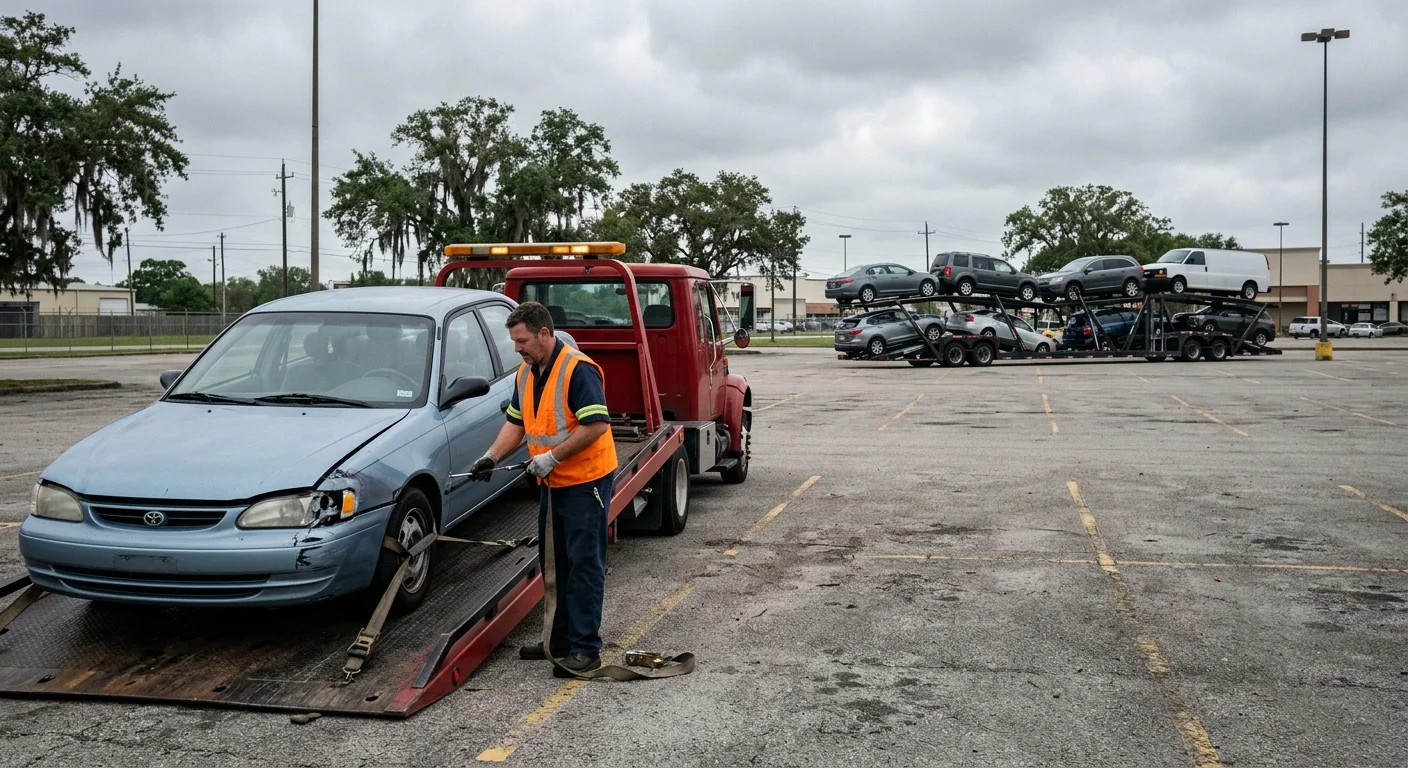
Lead with distance, deadline, running-or-not, and enclosed versus open. See long-distance towing prices and long-distance towing. We do not quote unsourced per-mile rates.
The choice starts with whether the car runs
Start with four basic functions. Does the car start, steer, brake, and roll? A car can run yet still be unsafe to drive. It might overheat, lose electrical power, or have damaged steering. In that case, treat it as a disabled vehicle.
A tow usually makes sense when the car can’t complete its current trip. That could mean moving it from Metairie to a repair shop, from a Westbank driveway to a mechanic, or from an Orleans Parish parking area to secure storage. The request has one pickup point and one clear destination.
Vehicle transport fits a different situation. The car may be running, but you don’t want it driven during a planned relocation. You may be moving it to the Northshore, a River Parishes address, or the Mississippi Gulf Coast. Pickup can be coordinated before the moving date, and the job is part of a larger plan.
A non-running car doesn’t automatically rule out vehicle transport. However, the carrier must know its exact condition before accepting it. Some loading setups depend on the vehicle rolling, steering, or braking.
Quick Tow New Orleans handles referrals for disabled-vehicle towing. We connect drivers with independent, licensed local towing operators. We aren’t a vehicle-shipping broker, so a planned shipping move may require a dedicated transport company.
When towing fits a disabled vehicle
Towing is the clearer choice when the vehicle has stopped unexpectedly. It also fits when driving could worsen mechanical or collision damage. The operator can move the car from its present location to a repair shop, residence, storage site, or another agreed destination.
Local geography matters. A breakdown along I-10, I-610, or US-90B creates different loading conditions than a car sitting in a Kenner driveway. Shoulder width, traffic, surface condition, and vehicle position all affect how the operator approaches the pickup. Tell the operator if the car is in a travel lane, parking garage, soft shoulder, or enclosed lot.
A long-distance towing referral can also fit a disabled vehicle going beyond the immediate neighborhood. Distance alone doesn’t turn a tow into vehicle shipping. A direct move to one known destination can still be a towing job, even when it crosses parish lines.
The vehicle’s condition helps determine the equipment. A car with wheel, suspension, or clearance concerns may need flatbed towing. The operator must make that call after hearing the details.
Don’t choose based only on an advertised starting number. Ask what service is being offered and how the operator will calculate the charge. Our guide to long-distance towing prices in New Orleans explains which questions help uncover the full bill.
When transport may fit a planned move
Vehicle transport usually fits a scheduled relocation rather than a roadside problem. Common examples include moving a second car, sending a vehicle to a new owner, or relocating a project car that isn’t ready for regular driving.
The transport company may use a multi-car trailer or another carrier setup. Ask whether pickup is directly from your address or from an accessible meeting point. Narrow streets, low branches, parking controls, and tight turns can limit where larger equipment can load.
Planned transport may make more sense when timing is flexible and the car is part of a household move. A shipment from New Orleans to the Mississippi Gulf Coast is a different request from a disabled car that stopped near the High Rise. Explain the purpose of the move when contacting providers.
Special vehicles deserve extra discussion. Low clearance, modified suspension, loose parts, and delicate finishes can affect loading. A restored vehicle also needs a different conversation from a daily driver with engine trouble. Our guide to classic car towing in New Orleans covers details worth sharing before anyone moves the vehicle.
Get the provider’s legal business name and a written description of the service. Ask who will possess the car, what equipment will be used, and what paperwork is required. Read the contract and coverage documents instead of relying on a verbal summary.
Distance, clearance and destination change the choice
Mileage is only one part of car towing versus vehicle transport. A disabled car going directly to a shop may fit towing. A running car included in a planned relocation may fit transport, even when both vehicles have similar destinations.
Clearance can be decisive. Tell the provider about lowered suspension, damaged wheels, locked steering, missing keys, or a transmission that won’t shift into neutral. Don’t describe the car as “easy to load” unless you know that’s true. A clear condition report helps the towing operator or carrier select suitable equipment.
Pickup access matters across New Orleans. A car inside a French Quarter garage presents different constraints from one in an open Metairie lot. Westbank pickup points may involve bridge traffic and limited staging space. A Northshore destination can require a Lake Pontchartrain crossing. Check Louisiana’s official traffic and incident map before departure, but don’t treat a clear map as a delivery-time promise.
The destination also needs attention. Confirm that the repair shop, residence, or storage site will accept the vehicle. Ask where the car should be placed and who can receive the keys. If the destination has a gate, garage, or restricted entrance, share that before pickup.
Route conditions can change after heavy rain, a collision, or a major event. Give the provider the actual pickup address, parish, destination, and access notes. A city name alone rarely explains enough.
What to confirm before handing over the car
Good information prevents the wrong service from being booked. Prepare these details before speaking with a towing operator or transport provider:
- The car’s year, make, model, and current location.
- Whether it starts, rolls, steers, and brakes.
- Any collision damage, fluid leaks, flat tires, or loose parts.
- Ground-clearance issues or modifications that affect loading.
- The exact destination and its vehicle-receiving instructions.
- Whether keys are available at pickup and who holds them.
- Garage heights, locked gates, narrow access, or parking restrictions.
- The provider’s legal name, service description, payment terms, and required documents.
Take clear photos of every side before handing over the vehicle. Photograph existing damage, the wheels, the interior, and any loose components. Keep copies of the work order and condition report. Remove valuables and personal documents unless the provider gives different written instructions for the move.
Ask what happens if the destination can’t receive the car. Storage, redelivery, cancellation, and access terms should be discussed before pickup. Don’t assume towing and vehicle transport use the same contract or billing method.
Quick Tow New Orleans doesn’t set an operator’s prices or transport terms. Our line takes calls 24/7 for towing referrals. For planned vehicle shipping, contact a transport provider and confirm its service details directly.
When to call us
Call when a disabled car needs a licensed towing professional for a direct move to a repair shop, residence, or other confirmed destination. Call (504) 474-5530. We match you with a licensed local operator who quotes before the truck rolls.