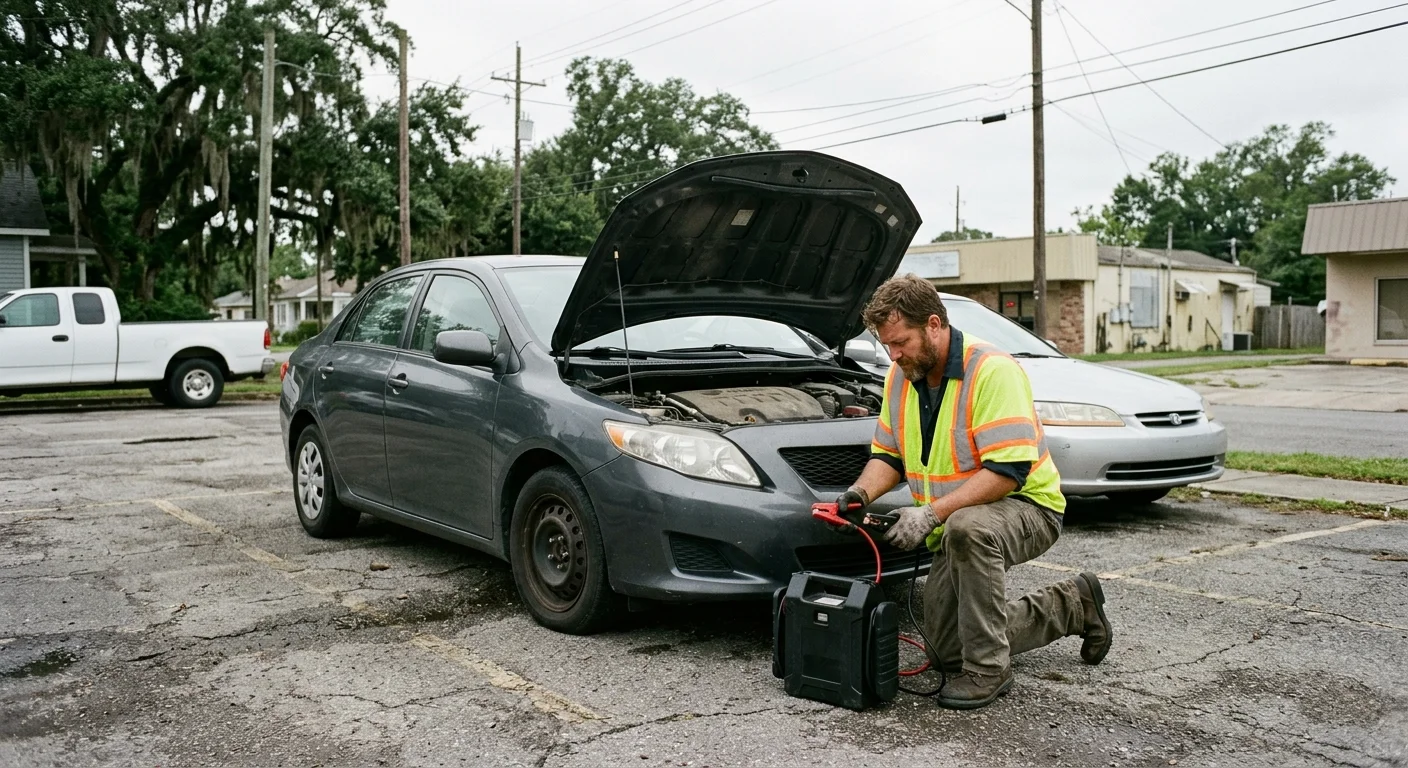
Smell, flood, and hybrid or EV status decide jump versus tow. Do not publish an unsourced jump price. See jump-start and jump-start or tow. The operator quotes before the truck rolls.
The short answer on pay-per-call pricing
A pay-per-call jump start means you request one roadside service without buying a membership first. The charge comes from the independent operator who accepts the job. Quick Tow New Orleans is a referral service. We take the calls and match drivers with licensed local operators, but we don’t perform jump starts or set operator prices.
We couldn’t confirm a public New Orleans or Louisiana figure for a customer-requested jump start. The City doesn’t publish a standard consumer jump-start price. Louisiana’s LPSC towing schedule governs non-consensual towing, not a battery jump you request and approve. Those towing rates shouldn’t be treated as roadside-service prices.
That leaves one dependable way to learn the cost: ask the matched operator before authorizing service. Request the total charge if the operator can provide it. Otherwise, ask exactly how the final amount will be calculated.
Clarify whether the charge covers only the jump attempt. Ask what happens if the car still won’t start. A failed jump may lead to a separate towing decision, but it shouldn’t be assumed to be part of the first service.
This distinction matters across metro New Orleans. A car in a Mid-City parking lot presents different access from one inside a low-clearance garage. A shoulder on I-10 or US-90B creates another working setting. Give the operator the exact location and conditions before agreeing to the service.
Our roadside assistance service page explains how the matching process works.
What can change the operator’s price
The operator needs a clear description before setting the charge. Start with the vehicle’s year, make, model, and exact location. Mention whether it’s in a driveway, garage, parking lot, neighborhood street, or highway shoulder.
Access can shape the service offered. A sedan parked nose-first against a wall may leave little working room. A vehicle inside a garage may have height or entry limits. Tight spaces in the French Quarter aren’t the same as open parking in Metairie or Kenner. Don’t assume one metro-wide amount applies to every setting.
The reported problem also matters. Tell the operator what happened before the car stopped starting. Mention whether the lights were left on, whether the dashboard responds, and whether another jump has already been attempted. This helps the operator decide whether a battery jump is the right request.
Ask how these details affect the charge:
- The vehicle’s location and ease of access
- The type and size of vehicle
- Whether special access or equipment is needed
- What the initial service includes
- What happens if the jump attempt doesn’t work
- Whether a tow would require separate approval and pricing
- Which payment methods the operator accepts
Don’t assume a lower advertised figure is the final bill. It may describe only one part of a service. Get the scope in plain language before the operator begins.
Timing can also affect an operator’s own pricing policy, but no verified New Orleans schedule covers customer-requested jump starts. Ask directly about nights, weekends, holidays, parking charges, or other possible additions. Our guide to weekend jump-start service in New Orleans covers the information to have ready before calling.
Where insurance or a motor club may fit
Your existing benefits may reduce what you pay directly. Coverage isn’t automatic, though. Louisiana doesn’t require towing or roadside-assistance coverage. Your policy, membership, warranty, or card agreement controls what applies.
Check your auto insurance documents for roadside assistance or towing and labor coverage. Look for the service limit, reimbursement rules, approved providers, and any required authorization. Some plans may arrange service themselves. Others may require you to pay first and submit documents later. Only your insurer can confirm your terms.
A motor-club membership may also include battery service. Check whether the membership is active and whether the covered person or covered vehicle must be present. Ask whether you must request help through the club’s own system. Calling someone independently could affect reimbursement under the agreement.
Vehicle warranties and maintenance plans sometimes carry roadside benefits. Read the current terms or contact the provider listed in your paperwork. Don’t assume a new vehicle, leased vehicle, or recently purchased battery includes a roadside visit.
Some credit cards offer travel or roadside benefits, but terms can change. Check the account’s current benefits guide. Confirm whether roadside help is included, merely arranged, or billed at a separate rate.
If no benefit applies, you can still request service directly. Our guide to cheap roadside assistance in New Orleans explains how to compare the actual scope instead of chasing an unsupported headline price.
On covered New Orleans corridors, the DOTD Motorist Assistance Patrol can provide a free battery jump when patrol staff are already on scene. MAP follows fixed routes and schedules. It isn’t a call-out service. Drivers can also check 511 Louisiana for current traffic and incident information.
What to confirm before the operator starts
A short pricing conversation can prevent a larger misunderstanding. Before authorizing the jump, confirm who will provide the service and how that operator charges. Quick Tow makes the connection, while the independent operator performs the work and receives payment directly.
Ask for the operator’s business name. Then repeat the vehicle description and exact location. In metro New Orleans, that means more than naming the city. Say whether you’re in Orleans Parish, Jefferson Parish, St. Bernard Parish, the West Bank, or across Lake Pontchartrain. Provide a garage level, lot entrance, nearby cross street, or highway direction when relevant.
Next, confirm the service itself. State that you’re requesting a jump start, not a tow. Ask whether the agreed charge covers the complete jump attempt. If the vehicle doesn’t start, ask whether the operator will stop and discuss the next step before performing anything else.
Use a simple checklist:
- What amount am I authorizing now?
- Is that a total charge or a starting component?
- What service does that amount include?
- Could any added charge apply to this location?
- What happens if the jump doesn’t start the car?
- Would towing be a separate service and payment?
- What form of receipt will I receive?
- Which payment methods are accepted?
If you’re relying on insurance, a warranty, a motor club, or a credit-card benefit, confirm its process first. Save the operator’s receipt and any service details your provider requests. A receipt doesn’t guarantee reimbursement, but missing documents can make a claim harder to support.
Don’t feel pressured to approve unclear work. Ask the operator to explain unfamiliar terms. If the price or scope changes after the vehicle is inspected, request the new information before agreeing.
When a jump start isn’t the right service
A jump start addresses a battery that doesn’t have enough power to start the vehicle. It doesn’t resolve every no-start condition. If the jump attempt fails, the operator may recommend a different roadside step or a tow.
Describe the symptoms instead of diagnosing the car yourself. Tell the operator whether the dashboard lights appear, whether the engine makes any sound, and whether the vehicle stopped while you were already driving. Mention visible damage, unusual smells, or recent water exposure. Those details help the operator decide whether a jump attempt makes sense.
New Orleans conditions can change that decision. A car that took on water during street flooding isn’t an ordinary dead-battery call. Our guide on what to do when your car floods explains why flood exposure needs separate handling.
Location matters too. A disabled car on a neighborhood street offers a different setting from a vehicle stopped in an interstate travel lane. If you’re in immediate danger, contact emergency services. A roadside request shouldn’t replace urgent help.
You may need towing when the car still won’t run, can’t remain where it stopped, or shouldn’t be driven. Get separate authorization and pricing before a tow begins. Don’t assume the jump-start charge includes transportation to a repair shop.
If the vehicle starts, that still doesn’t identify why the battery lost power. Arrange an appropriate inspection when the cause remains unclear. Repeatedly needing a jump is a sign that roadside battery support alone hasn’t settled the underlying problem.
When to call us
If a jump attempt fails or the vehicle needs towing, a licensed local operator can assess the next service. The line takes calls 24/7, including holidays. Call (504) 474-5530. We match you with a licensed local operator who quotes before the truck rolls.